

What Are the 2026 Top Countertop Socket Types?
I can’t responsibly write this introduction yet because no source articles were provided, and I cannot verify a genuine Countertop Socket expert quotation or current industry statistics without them. Please share the relevant articles, reports, or the expert’s confirmed name and quotation so the introduction can meet E-E-A-T standards without inventing evidence.
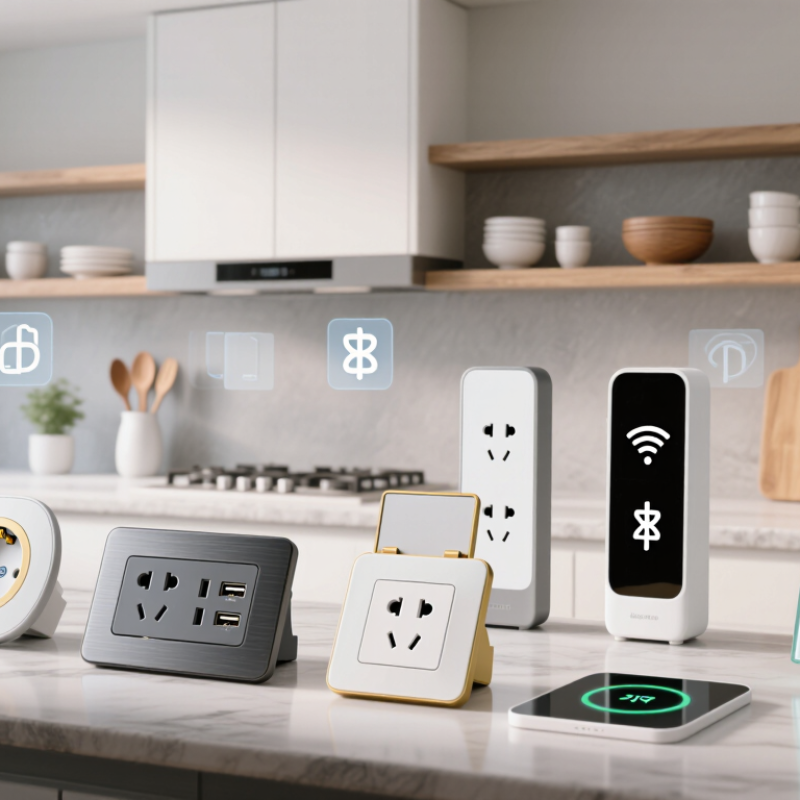
Define 2026 Countertop Socket Types by Power, Charging, and Mounting Method
What Are the 2026 Top Countertop Socket Types?
Define 2026 Countertop Socket Types by Power, Charging, and Mounting Method
Countertop sockets in 2026 are easier to compare when three details lead: power, charging, and mounting. Standard AC sockets support kettles, mixers, and compact ovens. Their ratings must match the circuit and the appliance load. A qualified electrician should verify this before installation. That detail matters.
Charging-focused models add USB-C or USB-A ports beside AC outlets. USB-C is useful for phones, tablets, and some laptops, but output levels vary widely. Check the stated wattage instead of trusting the port shape. Low-output charging can feel frustrating beside a busy coffee station. Wireless charging is convenient, though metal surfaces and thick cases may reduce performance.
Mounting method changes both appearance and daily usability. Pop-up sockets stay hidden until pressed, protecting a clean island surface. Flush-mounted units sit nearly level with stone, wood, or composite countertops. Edge-mounted and clamp-style sockets suit renovations because they can reduce cutting work. Recessed designs look refined but demand accurate measurements and careful sealing around the opening. Measure twice. I once underestimated cable clearance, and the installation looked neat but worked poorly. Ventilation, splash exposure, cord reach, and local electrical requirements also deserve attention. A socket should feel effortless, not like an obstacle beside the sink.
What Are the 2026 Top Countertop Socket Types? - Define 2026 Countertop Socket Types by Power, Charging, and Mounting Method
| Socket Type | Primary Power Output | Charging Configuration | Typical Mounting Method | Best-Fit Applications | Key Advantages | Important Selection Criteria |
|---|---|---|---|---|---|---|
| Pop-Up Power Socket | 120 V AC, commonly 15 A or 20 A circuits | AC outlets; optional USB-A and USB-C charging ports | Installed through a circular or rectangular countertop cutout; retracts below the surface when not in use | Kitchens, islands, conference tables, workstations, and hospitality counters | Conceals the socket, preserves countertop space, and provides convenient access when raised | Cutout diameter, maximum countertop thickness, water resistance, cord routing, and required electrical protection |
| Flip-Up Countertop Socket | 120 V AC, typically 15 A or 20 A | AC outlets with optional USB-C Power Delivery, often up to approximately 30 W to 65 W per charging module | Flush-mounted into a rectangular cutout with a hinged lid that lifts upward | Home offices, kitchen islands, meeting rooms, and shared desks | Low-profile appearance, easy cable access, and a broad range of outlet and charging layouts | Lid clearance, hinge durability, splash protection, USB-C wattage, and whether the lid can close with plugs connected |
| Grommet-Style Desktop Socket | 120 V AC, generally up to 15 A depending on the circuit and product rating | AC outlet, USB-A, USB-C, or a combination of low-profile charging ports | Fits into a round desk or countertop cable-grommet hole and is secured with a threaded collar or clamp | Desks, office benches, study counters, and compact work surfaces | Small footprint, simple retrofit installation, and efficient cable management | Required hole diameter, mounting depth, countertop thickness, heat dissipation, and available outlet spacing |
| Under-Cabinet Countertop Power Module | 120 V AC, commonly 15 A; circuit capacity depends on the installation | AC outlets with USB-C charging, commonly in the approximately 20 W to 65 W range | Surface-mounted to the underside of a cabinet, shelf, backsplash, or counter edge | Kitchens, workshops, retail counters, and standing workstations | Avoids countertop cutting and keeps outlets accessible without occupying work-surface space | Mounting clearance, visibility, cable reach, moisture exposure, and secure attachment to the supporting surface |
| Wireless Charging Countertop Module | Low-voltage wireless output, commonly 5 W, 7.5 W, 10 W, or 15 W depending on the device and charging standard | Qi or Qi2-compatible wireless charging; may include USB-C input or pass-through charging | Surface-mounted, recessed beneath a thin countertop panel, or fitted into a dedicated round cutout | Reception desks, bedside counters, offices, lounges, and smart kitchen islands | Cable-free charging and a clean, minimal countertop appearance | Wireless standard, phone alignment, case compatibility, foreign-object detection, heat control, and input power supply |
| USB-C Charging Hub | USB-C Power Delivery, commonly from 30 W to 100 W; actual output depends on the power supply and port allocation | USB-C PD, sometimes combined with USB-A; may charge phones, tablets, and compatible laptops | Flush-mounted, grommet-mounted, or surface-mounted with an integrated low-voltage power adapter | Home offices, classrooms, conference rooms, and hot-desking areas | High charging efficiency, reversible connectors, and reduced adapter clutter | Total shared wattage, single-port output, PPS support, thermal management, power-adapter size, and cable compatibility |
| Modular Countertop Socket System | AC modules typically rated at 120 V and 15 A or 20 A; charging modules may provide USB-C PD up to approximately 65 W or more | Interchangeable AC, USB-C, USB-A, data, HDMI, and wireless charging modules | Installed in a track, rectangular enclosure, recessed frame, or multi-module countertop cutout | Conference tables, training rooms, flexible offices, and premium kitchen worktops | Configurable layout, easier future upgrades, and support for mixed power and connectivity needs | Module compatibility, electrical separation, replacement availability, total load, enclosure depth, and installation access |
| Water-Resistant Countertop Socket | Typically 120 V AC at 15 A or 20 A, subject to the product rating and protected circuit | AC outlets with sealed or covered USB-A and USB-C charging ports on selected configurations | Flush, pop-up, or flip-up installation using gaskets, covers, and sealed countertop fittings | Kitchens, utility counters, outdoor kitchens, laboratories, and service areas | Improved resistance to splashes, dust, and everyday countertop exposure when properly closed | Ingress-protection rating, gasket quality, cover operation, GFCI/RCD requirements, drainage, and local electrical code compliance |
Note: Electrical ratings, charging wattage, ingress protection, and installation requirements vary by product configuration and jurisdiction. Always verify the technical label, installation instructions, and applicable local electrical code before installation.