

Top 10 Polymer PE Masterbatch Manufacturers in China
Polymer Pe Masterbatch sits at the meeting point of resin chemistry, color control, and production consistency. For converters, the difference can show up in a film’s shade, a molded part’s surface, or a blocked filter at the line. The details matter.
MarketsandMarkets estimated the global masterbatch market at about USD 11.9 billion in 2023 and forecast growth through 2028. That figure covers masterbatch broadly, not polyethylene grades alone. It still signals a competitive market, where buyers need to assess more than price. Resin compatibility, pigment dispersion, carrier selection, batch consistency, and technical support all deserve close attention. Numbers need context.
This guide compares ten Chinese manufacturers of Polymer PE Masterbatch, with attention to product scope, manufacturing capability, and evidence buyers can verify. Dr. Ramani Narayan, a polymer scientist at Michigan State University, has focused much of his work on polymer materials and their performance. A useful takeaway from his field is: “A material choice must fit the application, not just the specification.” This is a paraphrase, not a verbatim quotation. It frames a practical question for procurement teams: will the masterbatch run reliably in the actual resin, equipment, and end use? Supplier claims can help, but samples, test records, and clear technical discussions matter more. This comparison is a starting point, not a substitute for qualification.
PE Masterbatch Explained: Polyethylene Carriers, Pigments, and Additives
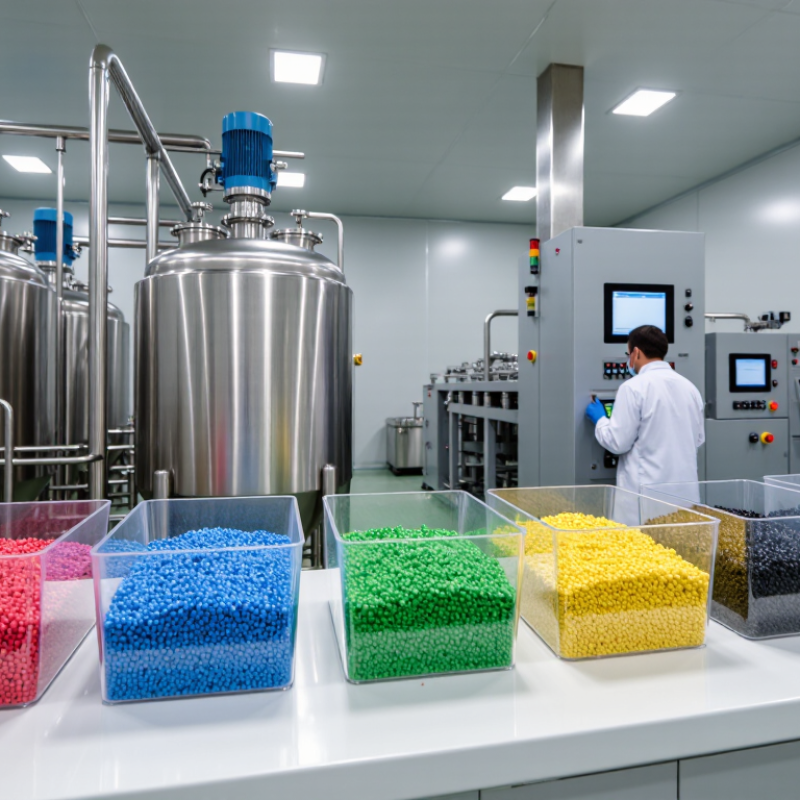
PE masterbatch combines concentrated pigment or functional additives with a polyethylene carrier. The carrier melts and disperses through the host resin during processing. For film, the goal is even color without visible specks, streaks, or weak spots. Small differences matter. A carrier grade that matches the base PE can improve compatibility and reduce processing surprises.
The market context is substantial: Plastics Europe’s Plastics—The Fast Facts 2024 reports 413.8 million tonnes of global plastics production in 2023. That figure covers all plastics, not just polyethylene, but it shows why consistent formulation and quality control matter at scale. Pigments provide color or opacity; additives can support functions such as UV resistance, slip, or antistatic performance. Their suitability depends on the final product and processing conditions.
In practice, manufacturers should check pigment dispersion, carrier compatibility, moisture, and dosing accuracy. A small dosing error can shift film color or surface feel. Not always. Trial runs should record melt temperature, screw speed, and appearance, then compare samples under the same lighting. Published data helps frame the industry, but it cannot replace testing with the actual resin and production line. A glossy pellet is not proof of reliable performance.
Top 10 Polymer PE Masterbatch Manufacturers in China - PE Masterbatch Explained: Polyethylene Carriers, Pigments, and Additives
The table below compares ten common PE masterbatch categories and their typical ingredients, uses, and indicative starting let-down rates. These are general industry reference ranges, not product specifications or a manufacturer ranking; actual recommendations vary by formulation, equipment, and end-use requirements.
| No. | PE Masterbatch Type | Typical Colorant or Active Ingredient | Common Applications | Indicative Let-Down Rate* | Key Selection Consideration |
|---|---|---|---|---|---|
| 1 | White | Titanium dioxide (TiO₂) dispersed in a PE carrier | Films, bags, pipe, sheet, and molded parts requiring opacity or whiteness | About 1–5% | TiO₂ concentration, dispersion, opacity target, and outdoor durability |
| 2 | Black | Carbon black dispersed in a PE carrier | Agricultural film, geomembranes, pipes, cable compounds, and general black products | About 1–5% | Carbon black loading and dispersion; outdoor uses may need UV performance testing |
| 3 | Color | Organic or inorganic pigments, or dyes, selected for the target shade | Packaging, household products, containers, film, and injection-molded parts | About 1–5% | Color match, heat stability, lightfastness, migration, and regulatory requirements |
| 4 | UV Stabilizer | UV absorbers and/or hindered amine light stabilizers (HALS) | Agricultural film, outdoor furniture, packaging, and other sun-exposed PE products | About 0.5–3% | Exposure conditions, service life, pigment interactions, and compatibility with other additives |
| 5 | Antioxidant | Commonly hindered phenols and phosphite processing stabilizers | PE processing where melt heat and repeated processing can cause oxidation | About 0.1–1% | Resin grade, processing temperature, residence time, and food-contact requirements |
| 6 | Slip | Fatty acid amides such as erucamide or oleamide | Blown and cast films needing lower surface friction for converting or packaging | About 0.1–1% | Slip development over time, printability, sealing, and interaction with antiblock agents |
| 7 | Antiblock | Mineral particles such as silica or talc | PE film where reduced layer-to-layer sticking is needed for handling and winding | About 0.5–3% | Particle size and dispersion, haze, surface appearance, and film clarity |
| 8 | Antistatic | Antistatic agents, often surfactant-based or polymeric | Packaging and molded products where static charge can attract dust or hinder handling | About 0.5–3% | Required surface resistivity, humidity, migration behavior, and end-use contact rules |
| 9 | Processing Aid | Polymeric processing aids or selected fluoropolymer-based additives, depending on application | Film extrusion and other processes where surface defects or flow behavior need improvement | About 0.1–1% | Process compatibility, equipment conditions, regulatory status, and surface requirements |
| 10 | Filler | Calcium carbonate or another mineral filler in a PE carrier | Film, bags, sheet, and molded products where mineral loading is suitable for the specification | About 5–30% | Filler loading, particle treatment, mechanical-property targets, and processing limits |
*Let-down rates are indicative starting ranges only. Confirm the supplier’s technical data and run application trials before setting production levels.