

China Best DC Drive Manufacturers How to Choose?
Choosing among China’s best DC drive manufacturers requires more than comparing prices or browsing polished websites. A reliable dc drive supplier should demonstrate practical engineering experience, consistent production quality, and clear technical communication. Buyers should examine product ratings, input and output ranges, overload capacity, cooling design, protection functions, and compatibility with existing motors. A factory that explains these details patiently is usually more dependable than one offering vague promises.
Look for evidence, not slogans. Ask for test reports, quality certificates, application references, and sample performance data. A manufacturer experienced with cranes, conveyors, printing machines, or metal processing can better understand real operating conditions. Inspect how the drive performs during acceleration, sudden load changes, and extended running. Small details matter, such as terminal labeling, enclosure strength, wiring instructions, and replacement support.
The cheapest option may not be the most economical.
Communication also deserves careful attention. Can the supplier provide parameter guidance, troubleshooting support, firmware updates, and spare parts within a reasonable timeframe? Clear answers often reveal stronger internal processes. However, no checklist is perfect. Even experienced buyers can overlook after-sales responsiveness or local installation conditions. A thoughtful selection process should include factory verification, sample testing, and honest risk assessment. The best choice is not simply a manufacturer with impressive claims. It is a capable partner that can deliver a stable dc drive, document its performance, and remain accountable after installation.
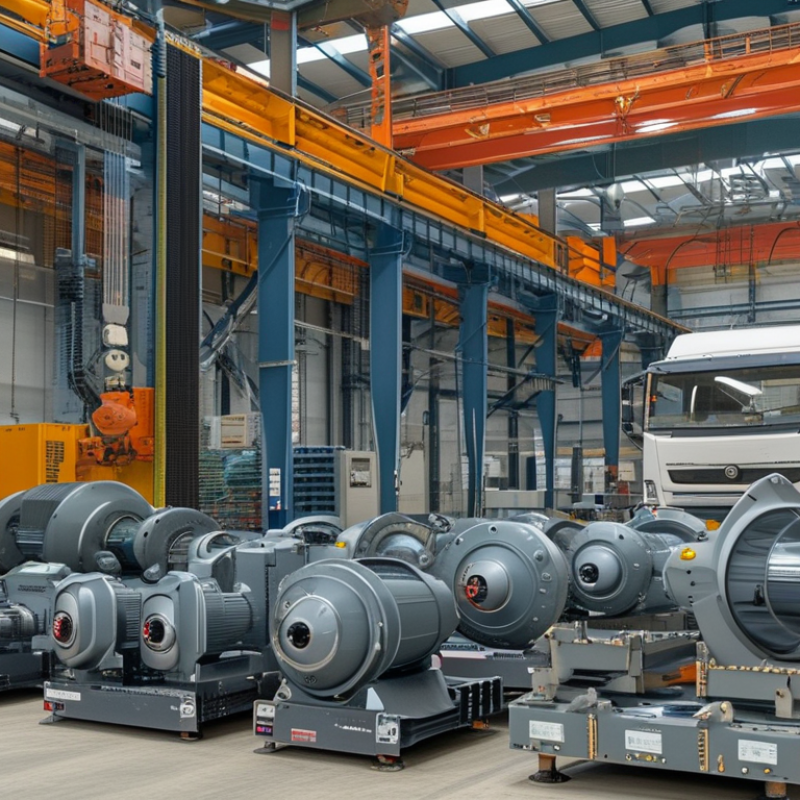
What Is a DC Drive and Where Is It Used?
A DC drive is an electronic controller for a direct-current motor. It adjusts voltage and current to control speed, torque, and rotation direction. Unlike a basic switch, it responds to changing machine demands. The motor can start smoothly instead of pulling a sudden current surge. This reduces mechanical stress on belts, gears, and couplings. Operators can also maintain steady speed during varying production loads.
DC drives are used in conveyors, hoists, cranes, printing equipment, elevators, and winding machines. They are useful when precise low-speed torque matters. In a conveyor, the drive can prevent products from shifting during startup. In a winding system, feedback helps keep material tension more stable. I have found that poor tuning often creates vibration, even when the motor appears correctly sized. Small details matter. Cable length, cooling, and braking requirements can change performance.
Choosing a DC drive requires checking motor voltage, current, power, and overload capacity. The application also determines whether open-loop or closed-loop control is suitable. Closed-loop systems use feedback to correct speed errors more accurately. Dust, heat, moisture, and limited cabinet space should influence the enclosure and cooling design. Reliable drives provide fault records, clear parameters, and accessible maintenance instructions. Do not choose only by rated horsepower. A cheaper unit may demand more service later. It is not perfect. Testing the drive with the real load remains the most dependable verification.
China Best DC Drive Manufacturers How to Choose? - What Is a DC Drive and Where Is It Used?
| Category | Data Dimension | Typical Technical Information | Why It Matters When Choosing a DC Drive |
|---|---|---|---|
| DC Drive Basics | Definition | A DC drive controls the speed, torque, and direction of a DC motor by regulating the armature voltage and, when required, the field current. | Confirm that the drive is designed for the motor type and control method used in the application. |
| Main Power Conversion | Most industrial DC drives use controlled rectifiers or power electronic switches to convert AC input into adjustable DC output. | The input supply, phase configuration, and conversion topology must match the available electrical system. | |
| Speed Control Range | A properly configured closed-loop DC drive can provide a wide speed range, commonly from near zero speed to rated motor speed; actual performance depends on feedback and motor design. | Select a drive with sufficient low-speed regulation and feedback capability for the required process accuracy. | |
| Torque Characteristics | DC motors provide strong starting torque and a nearly linear relationship between armature current and torque within the motor's operating limits. | Check continuous and overload current ratings, especially for hoists, conveyors, rolling equipment, and start-stop machinery. | |
| Regenerative Operation | Four-quadrant drives can motor and brake in both rotational directions, allowing regenerative braking when compatible with the power system. | Choose four-quadrant control when rapid reversing, controlled braking, or lowering loads is required. | |
| Key Selection Data | Input Voltage and Frequency | Common industrial supplies include three-phase AC systems such as 380–415 V at 50 Hz or 440–480 V at 60 Hz, depending on the installation location. | The drive input rating must match the local supply voltage, frequency, phase count, and allowable voltage variation. |
| Motor Armature Voltage | Industrial DC motors commonly use armature voltage ratings such as 180 V, 240 V, 400 V, or 500 V, but the correct value must be taken from the motor nameplate. | The maximum drive output voltage must not exceed the motor's rated armature voltage. | |
| Motor Field Voltage and Current | Separately controlled field supplies are used on many industrial DC motors; field voltage and current vary by motor design and must be checked on the nameplate. | Incorrect field settings can cause overspeed, insufficient torque, or motor overheating. | |
| Continuous Current Rating | The drive's continuous armature current rating should be at least equal to the motor's continuous rated armature current. | Sizing by current, rather than motor power alone, helps prevent thermal overload during continuous operation. | |
| Overload Capacity | Many industrial drives provide short-term overload capacity, often around 150% of rated current for a limited duration; the exact value and time depend on the design. | Match the overload profile to starting torque, acceleration time, shock loads, and duty cycle. | |
| Feedback Device | Armature-voltage feedback is suitable for basic control, while tachogenerators or encoders improve speed regulation and dynamic response. | Select feedback based on the required speed accuracy, low-speed performance, and load variation. | |
| Typical Applications | Conveyors and Material Handling | Used where adjustable speed, high starting torque, and controlled acceleration are needed. | Evaluate load inertia, frequent starts, braking requirements, and belt or product protection. |
| Cranes, Hoists, and Elevators | DC drives can provide high starting torque and controlled braking for lifting and lowering operations. | A four-quadrant drive, emergency stopping function, and correctly engineered braking system may be required. | |
| Rolling Mills and Metal Processing | Historically used for precise speed and torque control in rolling, coiling, and tension-control processes. | Check dynamic response, regenerative capability, tension control, and harmonic-management requirements. | |
| Printing, Paper, and Textile Machinery | Used in legacy and specialized lines requiring coordinated speed control and stable low-speed operation. | Review synchronization, tension regulation, feedback resolution, and compatibility with existing controls. | |
| Test Benches and Machine Tools | Suitable for applications requiring adjustable speed, repeatable torque, and rapid response. | Prioritize speed regulation, current-loop response, braking control, and command-signal resolution. | |
| Manufacturer Evaluation | Technical Documentation | Required documents include datasheets, installation manuals, wiring diagrams, parameter lists, fault codes, and maintenance instructions. | Clear documentation reduces commissioning time and supports safer troubleshooting. |
| Protection Functions | Important protections include overcurrent, overvoltage, field loss, overspeed, thermal overload, short circuit, and loss of feedback where applicable. | Protection coverage should reflect the motor, mechanical load, electrical system, and safety assessment. | |
| Environmental Rating | Verify ambient temperature, humidity, altitude, enclosure rating, vibration, dust, and cooling requirements before installation. | Environmental mismatch can shorten component life and cause nuisance trips or thermal derating. | |
| Control and Communication | Typical interfaces include analog speed references, digital inputs and outputs, relay contacts, and optional industrial communication interfaces. | Confirm compatibility with the PLC, operator panel, sensors, interlocks, and existing automation network. | |
| Service and Spare Parts | Assess commissioning support, repair capability, training, replacement availability, and expected product lifecycle. | Long-term service access is especially important for legacy production lines where unplanned downtime is costly. |
Note: Technical values shown are typical industry references only. Final DC drive selection must be verified against the motor nameplate, load profile, electrical supply, control requirements, installation environment, and applicable safety standards.
Related Posts
-
10 Best DC Drives for Industrial Applications?
-
China Top DC Drive Suppliers for Global Buyers?
-

Mastering the Basics of DC Drive Technology for Beginners
-

Top DC Motor Controller Solutions for China Best Buying Guide?
-
How to Choose the Right DC Motor Controller for Your Needs?
-
Understanding the Importance of DC Motor Controllers in Modern Automation Systems