How to Choose Winfort Commercial Smart Locks in 2026?
Commercial access control is changing quickly, but convenience should not outrank security. Grand View Research estimates that the global smart lock market could grow at a 19.6% compound annual growth rate from 2024 to 2030. This expansion reflects rising demand for mobile credentials, remote administration, and detailed entry records. It also creates more confusing choices for property managers.
Choosing Winfort commercial smart locks in 2026 requires more than comparing prices or touchscreen designs. A reliable evaluation should examine credential types, encryption, user permissions, audit-log retention, battery warnings, and mechanical override options. NIST guidance on digital identity stresses strong authentication and careful credential management. The 2024 Verizon Data Breach Investigations Report also shows that stolen credentials remain a major security concern. A lock that feels modern may still create risk if administrators share passwords or ignore software updates.
This guide will assess Winfort models through practical workplace situations. Picture a hotel corridor at 2 a.m., a staff member needing temporary access, or a manager reviewing an unexplained door event. Compatibility matters, too. Readers should verify door thickness, lock body dimensions, network requirements, fire-safety provisions, and integration with existing access platforms. No shortlist is perfect. Battery life may vary with traffic, temperature, and connectivity. Product pages may not reveal every operating limitation. Therefore, the final decision should combine manufacturer documentation, professional installation advice, pilot testing, and feedback from daily users. The goal is not simply to buy a smart lock. It is to build controlled, auditable, and dependable access for real commercial spaces.
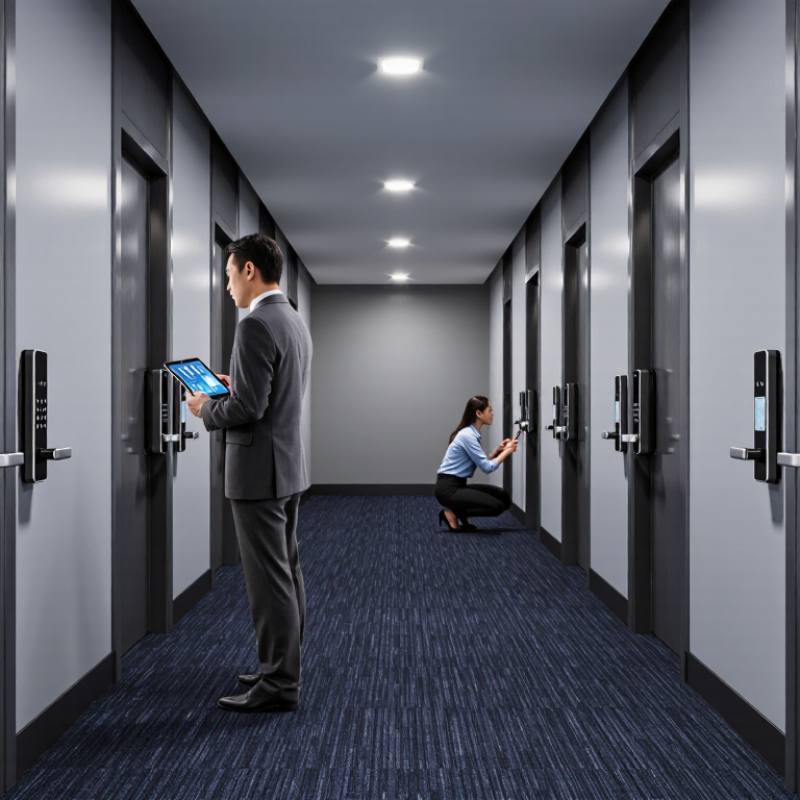
Define Commercial Access Needs and Security Requirements
Before choosing a commercial smart lock, define who needs access, where, and under which conditions. A warehouse manager may need entry at 6 a.m., while a contractor needs access for only two hours. List doors by risk, not convenience. Consider staff turnover, visitor traffic, emergency exits, delivery schedules, and offline operation.
The 2024 Verizon Data Breach Investigations Report found that the human element appeared in 68% of breaches. That finding makes credential management essential. Choose systems supporting unique user credentials, role-based permissions, rapid revocation, and detailed entry records. Avoid shared codes. They are easy to distribute and difficult to trace. The 2024 IBM Cost of a Data Breach Report placed the global average breach cost at 4.88 million dollars. A smart lock cannot prevent every incident, but strong identity controls can reduce avoidable exposure.
Review the physical environment carefully. A coastal site may need corrosion resistance, while a busy clinic needs quiet, frequent operation, and simple evacuation procedures. Confirm battery alerts, mechanical override procedures, network fallback, and integration with existing access software. NIST guidance emphasizes reliable authentication and controlled credential lifecycle management. That principle applies beyond computers. Do not assume the most connected lock is the safest choice. I would test a small group of doors first. Real users often reveal problems that specifications hide. Even a well-designed access plan may need revision after night-shift testing.
How to Choose Commercial Smart Locks in 2026?
Define commercial access needs and security requirements before selecting a smart lock system.
These planning scores represent the relative importance of common commercial access requirements on a 1–10 scale. Organizations with multiple sites, rotating users, sensitive areas, or strict audit obligations should give greater weight to centralized management, credential control, event logging, and business continuity.
Compare Winfort Smart Lock Types and Entry Applications
Commercial entry planning starts with the door, traffic, and security risk. A keypad lock suits staff entrances where users need quick, shared access. RFID models work well in hotels, offices, and campuses with issued cards. Biometric readers fit controlled rooms, but wet fingers and gloves can reduce recognition. Mobile credentials are convenient, though dead batteries and phone changes need a backup plan.
Match the lock to the application, not the trend. Glass office doors may require a compatible electric strike and careful alignment. Warehouse doors need durable hardware, audit trails, and reliable operation after repeated use. For server rooms, wired locks and multi-factor entry offer stronger control. Guest areas may favor temporary codes, while employee entrances benefit from scheduled permissions. Test the reader at the actual doorway. Metal frames, sunlight, dust, and network gaps can change performance.
Reliable selection also depends on management details. Confirm offline access, emergency power, user removal, and event-log storage before purchase. Ask whether installation can preserve fire-exit routes and accessibility. A low-cost lock may become expensive after batteries, service calls, and software fees. I have seen teams overvalue fingerprint speed and undervalue door alignment. That mistake is easy to repeat. Review failed-entry logs monthly, and revise permissions when staff roles change.
Assess Total Cost, Compliance, and Long-Term Scalability
Choosing a commercial smart lock in 2026 requires more than comparing purchase prices. Assess the total cost across five years. Include hardware, installation, software subscriptions, batteries, training, maintenance, and replacement credentials. A low-cost lock may become expensive after repeated site visits or limited integration options.
Compliance must be checked before deployment. Confirm whether the system supports emergency egress, accessibility requirements, fire-safety procedures, and local building rules. Review how access logs are stored, protected, exported, and deleted. Ask for independent test reports and clear documentation. Marketing claims are not enough. A compliance checklist helps, but it can still miss an unusual regional requirement.
Scalability matters when doors, users, or locations increase. Look for centralized administration, role-based permissions, offline operation, and stable API support. Test one entrance under real conditions: weak wireless coverage, low battery, shift changes, and a failed phone. The result may expose problems that a showroom cannot reveal. I have found that installation labor is often underestimated, especially in older buildings. Plan for mixed door types and future credential changes. A practical pilot, transparent pricing, and written support terms make the decision more reliable. Some uncertainty remains, and that should be recorded rather than hidden.