

- Home
- Request for Quote
- Products
- Variable Frequency Drive Systems and Controls
- AC Variable Frequency Drives
- ABB ACS150 Component Drives :: Overview
- ABB ACS150 Component Drives :: Technical Specifications
- ABB ACS150 Component Drives :: Ratings, Types, Voltages and Construction – Prices
- ABB ACS150 Component Drives :: Dimensions, Weight and Noise
- ABB ACS150 Component Drives :: Interface and Options (prices)
- ABB ACS150 Component Drives :: Technical Data
- ABB ACS150 Component Drives :: Control Connections
- ABB ACS350 General Machinery Drives :: Overview
- ABB ACS350 General Machinery Drives :: Technical Specifications
- ABB ACS350 General Machinery Drives :: Ratings, Types, Voltages and Construction
- ABB ACS350 General Machinery Drives :: Dimensions, Weight and Noise
- ABB ACS350 General Machinery Drives :: Interface and Options (prices)
- ABB ACS350 General Machinery Drives :: Technical Data
- ABB ACS350 General Machinery Drives :: Control Connections
- ABB ACS550 AC Variable Frequency Drive :: Overview
- ABB ACS550 AC Variable Frequency Drive :: Hardware Description
- ABB ACS550 AC Variable Frequency Drive :: Standard Features and Options
- ABB ACS550 AC Variable Frequency Drive :: Specifications
- ABB ACS550 AC Variable Frequency Drive :: 230V Ratings (pricing)
- ABB ACS550 AC Variable Frequency Drive :: 380V Ratings (pricing)
- ABB ACS550 AC Variable Frequency Drive :: 480V Ratings (pricing)
- ABB ACS550 AC Variable Frequency Drive :: Dimensions: ACS550 NEMA 1 R1 through R6 Frame Size
- ABB ACS550 AC Variable Frequency Drive :: Dimensions: ACS550 NEMA 12 R1 through R6 Frame Size
- ABB ACS550 AC Variable Frequency Drive :: Dimensions: ACS550-02 NEMA 1 R7 Frame Size
- ABB ACS550 AC Variable Frequency Drive :: Dimensions: ACS550-02 NEMA 1 R8 Frame Size
- ABB ACS550 AC Variable Frequency Drive :: Dimensions: ACS550-U2 NEMA 1 R7 & R8 Frame Size
- ABB ACS 600 Adjustable Speed AC Drives
- ABB ACS800 AC Variable Frequency Drive :: Overview
- ABB ACS800 AC Variable Frequency Drive :: Standard Features / Available Options and Software
- ABB ACS800 AC Variable Frequency Drive :: Specifications
- ABB ACS800 AC Variable Frequency Drive :: Basic Type Code Information
- ABB ACS800 AC Variable Frequency Drive :: 230V Ratings (pricing)
- ABB ACS800 AC Variable Frequency Drive :: 380V Ratings (pricing)
- ABB ACS800 AC Variable Frequency Drive :: 460V Ratings (pricing)
- ABB ACS800 AC Variable Frequency Drive :: ACS 800-U2 NEMA 1 R7 & R8 Frame Size and ACS 800-02+C111 IP21 (NEMA 1) R7 & R8 Frame Size
- ABB ACS800 AC Variable Frequency Drive :: ACS 800 NEMA 1/12 R2 through R6 Frame Size
- ABB ACS800 AC Variable Frequency Drive :: ACS 800-02 NEMA 1 R7 & R8 Frame Size
- ABB ACS800 AC Variable Frequency Drive :: ACS 800-U4 Module R7 Frame Size
- ABB ACS800 AC Variable Frequency Drive :: ACS 800-U4 Module R8 Frame Size
- ABB ACS880 Industrial Low Voltage AC Drives
- ABB ACS880 AC Drives – Technical Data
- Wall-mounted single drives, ACS880-01
- ABB ACS880 Ratings, types and voltages
- ABB ACS880 AC Drives – Dimensions & Connectivity
- ABB ACS880 AC Drives – Standard Software
- ABB ACS880 AC Drives – Intuitive Human-Machine Interface
- ABB ACS880 AC Drives – Integrated Safety
- ABB ACS880 AC Drives – Flexible Connectivity
- Input/output Modules, Speed Feedback Interfaces & Communication Modules
- ABB Softstarters, Type SSM, Medium Voltage, 2300-13,800V :: Description
- ABB Type SSM Softstarters – Medium Voltage, 2300-13,800V :: General Information
- ABB Type SSM Soft Starters – Medium Voltage, 2300 – 13,800V :: Catalog Numbers
- ABB Soft Starters, Type SSM – Medium Voltage, 2300-13,800V :: Technical Data
- ABB Softstarters, Type SSM, Medium Voltage, 2300-13,800V :: Approx. Dimensions
- Yaskawa AC Drives
- AuCom Soft Starters
- Emerson Industrial Automation (Control Techniques and Saftronics) AC Drives
- Control Techniques – Commander SE AC Drive
- Control Techniques – Commander SK AC Drive
- Commander SK :: Features
- Commander SK :: Terminal Diagram and Description
- Commander SK :: Specifications and Dimensions
- Commander SK – Options :: Overview
- Commander SK – Options :: Configuration and Programming
- Commander SK :: Operator Interface
- Commander SK :: Power Accessories
- Commander SK :: Environmental Protection and Cable Management
- Commander SK :: Input / Output
- Commander SK :: Communication
- Commander SK :: Programming Software
- Control Techniques – Commander SX AC Drive
- Commander SX :: Features, Ratings, Prices and Ordering
- Commander SX :: Terminal Diagram and Description
- Commander SX:: Specifications and Dimensions
- Commander SX :: Options – Overview / Drive Configuration and Programming
- Commander SX :: Communication / Operator Interface
- Commander SX :: Power Accessories
- Commander SX :: Input/Output and Communication
- Control Techniques – Unidrive SP AC Drive
- Unidrive SP :: Features
- Unidrive SP :: Ratings, Prices & Ordering – Wall Mount
- Unidrive SP :: Ratings, Prices & Ordering – Free Standing Cubicle
- Unidrive SP :: Unidrive SP Regen Mode
- Unidrive SP :: Terminal Diagram and Description
- Unidrive SP :: Specifications and Dimensions
- Unidrive SP :: Options – Overview
- Unidrive SP :: Operator Interface
- Unidrive SP :: Power Accessories
- Unidrive SP :: Option & Feedback Modules
- Unidrive SP :: Option Input / Output Modules
- Unidrive SP :: Option Application / Programming Modules
- Unidrive SP :: Option Communication Modules
- Unidrive SP :: Drive Configuration and Programming
- Unidrive SP :: Application Programming Software
- Unidrive SP :: Pre-packaged Solutions
- Saftronics GP10 AC Drives
- Saftronics GP10 – Pricing, Dimensions & Weights
- Saftronics GP10 – Optional DC Link Reactors
- Saftronics GP10 – Options & Accessories
- Saftronics GP10 – Palm Pilot Saflink Kit
- Saftronics GP10 – SR10 Radio Modem Kit
- Saftronics GP10 – Relay Output Card
- Saftronics GP10 – Digital I/O Interface Card
- Saftronics GP10 – Analog I/O Interface Card
- Saftronics GP10 – SF-10 Ethernet Module
- Saftronics GP10 – Interface Option Card
- Saftronics GP10 – Under Torque Detection Option
- Saftronics GP10 – 24 VDC or 24/120 VAC Interface
- Saftronics GP10 – Air Pressure Sensor + V/I Converter Output Card
- Saftronics GP10 – HMI Pump Controller
- Saftronics GP10 – SDBU – Dynamic Brake Module
- Saftronics GP10 – 208-230V Dynamic Brake Packages
- Saftronics GP10 – 460V Dynamic Brake Packages
- Saftronics GP10 – Ratings Efficiency & Watts Loss
- Saftronics GP10 – Standard Specifications
- Saftronics GP10 – Basic Connection Diagram
- Saftronics GP10 – Basic Connection Diagram to PLC
- Saftronics GP10 – Basic Connection Diagram (Europe)
- Saftronics GP10 – Basic Connection to PLC (Europe)
- Saftronics S10 AC Drives
- Saftronics S10 – Options and Accessories
- Saftronics S10 – Standard Specifications
- Saftronics S10 – Dimensions
- Saftronics S10 – Dimensions – Part Number: S102002 – S102003 & S104001 – S104003
- Saftronics S10 – Dimensions – Part Number: S102F25 – S102001
- Saftronics S10 – Dimensions — Part Number: S102F25 – S102001 no Operators
- Saftronics S10 – Dimensions – Part Number: S102002-2003 & S104001-4003
- Saftronics S10 – Basic Wiring Diagram
- Saftronics CV10 AC Drives
- Saftronics CV10 – Part Numbers, Dimensions & Weights
- Saftronics CV10 – LED Keypad with Speed Pot
- Saftronics CV10 – LCD Keypad (supports 5 Languages)
- Saftronics CV10 – Keypad Extension Cable
- Saftronics CV10 – Communication Option Cards
- Saftronics CV10 – Bi-Polar Speed Reference Option Card
- Saftronics CV10 – Standard Specifications
- Saftronics CV10 – Ratings Efficiency and Watts Loss
- Saftronics CV10 – Dimensions Frame 1 – IP20 (Open Chassis)
- Saftronics CV10 – Dimensions Frame 1 – NEMA 1
- Saftronics CV10 – Dimensions Frame 2 – IP20 (Open Chassis)
- Saftronics CV10 – Dimensions Frame 2 – NEMA 1
- Saftronics CV10 – Dimensions Frame 3 – IP20 (Open Chassis)
- Saftronics CV10 – Dimensions Frame 3 – NEMA 1
- Saftronics CV10 – Basic Wiring Diagram
- Saftronics VG10 AC Drive
- Saftronics VG10 – Pricing, Dimensions & Weights
- Saftronics VG10 – Optional DC Link Reactors
- Saftronics VG10 – Options and Accessories
- Saftronics VG10 – Palm Pilot Saflink Kit
- Saftronics VG10 – Relay Output Card
- Saftronics VG10 – SR10 Radio Modem Kit
- Saftronics VG10 – Digital I/O Interface Card
- Saftronics VG10 – Analog I/O Interface Card
- Saftronics VG10 – SF-10 Ethernet Module
- Saftronics VG10 – PGX Encoder Feedback Card
- Saftronics VG10 – Encoder + Analog Output Card
- Saftronics VG10 – PG Feedback Card SOPCG11SPG
- Saftronics VG10 – PG Feedback Card SOPCG11SPG2
- Saftronics VG10 – Synchronized Operation Card
- Saftronics VG10 – 24 VDC or 24/120 VAC Interface Card Kit
- Saftronics VG10 – Air Pressure Sensor + V/I Converter Output Card
- Saftronics VG10 – SDBU – Dynamic Brake Module
- Saftronics VG10 – 208-230V Dynamic Brake Packages
- Saftronics VG10 – 460V Dynamic Brake Packages
- Saftronics VG10 – Ratings Efficiency and Watts Loss
- Saftronics VG10 – Standard Specifications
- Saftronics VG10 – DC Link Reactor 100 HP and Above
- Saftronics VG10 – Basic Connection Diagram (Sink Logic, Mainly America)
- Saftronics VG10 – Basic Connection Diagram to PLC (Sink Logic, Mainly America)
- Saftronics VG10 – Basic Connection Diagram (Source Logic, Mainly Europe)
- Saftronics VG10 – Basic Connection Diagram to PLC (Source Logic, Mainly Europe)
- Saftronics PC10 (Obsolete) AC Drives
- Saftronics PC10 – Options & Accessories
- Saftronics PC10 – SF-10 Ethernet Module Kit
- Saftronics PC10 – 24 VDC or 24/120 VAC Input + Relay Option Card
- Saftronics PC10 – 24 VDC or 24/120 VAC Interface Card Kit (PC10, GP10, or VG10 Inverter)
- Saftronics PC10 – Relay Output Card
- Saftronics PC10 – HMI Pump Controller
- Saftronics PC10 – PC10 120 VAC Option Card
- Saftronics PC10 – Palm Pilot Saflink Kit
- Saftronics PC10 – Dynamic Braking
- Saftronics PC10 – Drive Ratings Efficiency and Watts Loss
- Saftronics PC10 – Standard Specifications
- Saftronics PC10 – Part Number: PC102F12-9, PC102F25-9, PC102F50-9 & PC102001-9
- Saftronics PC10 – Part Number: PC102002-9, PC102003-9, PC104F50-9, PC104001-9, PC104002-9 & PC104003-9
- Saftronics PC10 – Part Number: PC102005-9 & PC104005-9
- Saftronics PC10 – Part Number: PC102007-9, PC102010-9, PC104007-9 & PC104010-9
- Saftronics PC10 – NEMA 1 Kit Dimensions
- Saftronics PC10 – Basic Wiring Diagram
- Fincor 5700 Series (Obsolete) AC Drive
- Fincor 5740 Series (Obsolete) AC Drive
- Fincor 5750 Series (Obsolete) AC Drives
- Motortronics Soft Starters
- SOLCON Soft Starters
- SOLCON RVS-DN Digital Soft Starter with Advanced Motor Protection
- Solcon HRVS-DN Digital Soft Starter with Advanced Motor Protection
- Solcon HRVS-TX Digital Transformer Soft Starter
- SOLCON RVS-AX Analog Soft Starters
- SOLCON Solstart Plus Analog Soft Starters
- SOLCON RVS-BX Basic Soft Starter with Built-In Bypass
- SOLCON RVS-DX Digital Soft Starter with Built-In Bypass
- SOLCON RVS-EX Digital Soft Starter for Explosion Proof motors with Built-In Bypass
- SOLCON SEM-N Rugged Soft Starter for Naval and Military Specifications
- SOLCON SOLSTART Miniature Analogue Soft Starter
- SOLCON SOLSTART 1P Single Phase Analogue Soft Starter
- SOLCON SOLBRAKE DC Injection Brake Soft Starter
- Magnetek – Soft Starters
- WEG Variable Frequency Drives, Controls and Motors
- ABB ACS150 Component Drives :: Overview
- DC Variable Speed Drives
- DC Drive Fundamentals
- ABB DCS 400 Digital DC Converter Drive
- ABB DCS 500 DC Drive
- ABB DCS800 DC Drives Overview
- DCS800 – Power Converter Modules
- DCS800 Panel Drive
- DCS800 Enclosed Converters
- DCS800 Rebuild and Upgrade Kits
- Adaptive Programming and Start-up Assistants
- DriveWindow Light – Startup and Maintenance Tool
- DCS800 Commissioning Macros
- DCS800 Firmware
- DCS800 Technical Specifications
- Current Ratings – Modules – Non-Regenerative
- Current Ratings – Modules – Regenerative
- Current Ratings – Modules – DCS800-EP Panel Drive
- DCS800 Dimensions and Weights
- DCS800 Technical Diagram
- DCS800 Plug-in Options
- DCS800 Feedback Options
- DCS800 Communication Options – Fieldbus Control
- DCS800 External Field Supply
- ABB DCS800-EP replaces Reliance FlexPak® 3000 – 230V Drive Cross Reference
- ABB DCS800-EP – 460V Drive Cross Reference
- ABB DCS800-EP – Options Cross Reference
- ABB DCS800-EP – Product Differences and Remedies – Hardware
- ABB DCS800-EP – Product Differences and Remedies – Control/Interface & Features
- ABB DCS800-EP – Drive Dimensions
- ABB DCS800-EP – Installation Procedure – Wiring and Configuration
- ABB DCS800-EP – Parameter Cross-Reference
- FINCOR Series 2600/2610 DC Drives
- 50 Amp & 90 Amp DC Field Regulators
- Mentor II | Quantum III | FXM5 Change of Status
- SIMOREG 6RA24 Siemens DC Drive Features
- SIMOREG 6RA70 Siemens Variable Speed DC Drive Description and Base Drive Catalog Numbers
- SIMOREG 6RA70 Siemens DC Drive Features
- SIMOREG 6RA70 DC Master Design & Operation – Converters
- SIMOREG 6RA70 Design & Operation – Parameterization Devices
- SIMOREG 6RA70 Design & Operation – Software Structure
- SIMOREG 6RA70 Design & Operation – Closed-Loop Functions in Armature Circuit
- SIMOREG 6RA70 Design & Operation – Closed-Loop in Field Circuit
- SIMOREG 6RA70 Design & Operation – Optimization Run
- SIMOREG 6RA70 Design & Operation – Monitoring & Disgnosis
- SIMOREG 6RA70 Design & Operation – Functions of Inputs & Outputs
- SIMOREG 6RA70 Design & Operation – Safety Shutdown (E-STOP)
- SIMOREG 6RA70 Design & Operation – Serial Interface
- 1000 Hp DC Variable Speed Drive System
- 3000 Hp DC Variable Speed Drive
- Permanent Magnet DC Motors
- SCR Drive Controllers (SCR-Silicon Controlled Rectifier)
- Custom Electric Control Panel Shop
- GE AC & DC Motors (G.E. Motors – General Electric AC & DC Motor)
- GE X$D Ultra® NEMA Premium Efficiency – TEFC AC Motors
- GE Kinamatic® Explosion Proof AC Motors
- GE Energy Saver® – TEFC Severe Duty AC Motors
- GE Kinamatic® General Purpose AC Motors
- GE Motors Energy Saver NEMA Premium Efficiency – ODP AC Motors
- GE ValueLine™ EPAct Efficiency – TEFC AC Motors
- GE ValueLine™ EPAct Efficiency – ODP AC Motors
- GE Permanent Magnet Custom DC Motors
- GE ValueLine™ Vertical Hollow Shaft AC Motors
- GE Permanent Magnet Standard DC Motors
- GE ASD Inverter Duty AC Motors
- G.E. Permanent Magnet Washdown DC Motors
- Avtron – Drives, Measurement and Tachs
- Avtron – Adjustable Speed Drives and Drive Systems
- Avtron – Speed and Length Measurement
- Avtron – Tachs, Tachometers, Encoders, Rotary Pulse Generators
- Avtron – Sales Literature and Instruction Sheets
- Avtron – Classic Tach Models
- Avtron – Price Quotation Request Form
- Avtron – Tachometers Availability
- Avtron – Heavy, Mill-Duty Encoders
- Avtron – Setting Air Gap on M285 Sensors
- Avtron – M4 Universal Encoder
- Avtron – M56, M67, M85 THIN-LINE
- Avtron – M285QUAD Outline Drawing
- Avtron – Severe Duty Encoders
- Avtron – Mill-Duty Encoders
- Avtron – M3 Universal Encoder
- Avtron – M3 Applications
- Avtron – M3 Installation
- Avtron – M3 Specifications
- Avtron – Tach Accessories
- Avtron – Tach Solutions
- Avtron – Rugged Environments
- Avtron – Selection by Motor Frame Size
- Avtron – Adapter Kits Outline Drawings
- Avtron – Motors with Brakes
- Avtron – NEMA C Face Mounting
- Avtron – Market Specific Applications
- Dynapar Encoders and Tachs
- ACURO AI25 Encoders
- Acuro Series AI25 Absolute Encoder with DeviceNet Interface
- Acuro Series AI25 Absolute Encoder with Profibus Interface
- Acuro Series AI25 Absolute Encoder with Interbus Interface
- Acuro Series AI25 Absolute Encoder with BiSS Interface
- Acuto Series AI25 Optical Encoders with SSI Interface
- Acuro Series AI25 Absolute Encoder with Parallel Interface
- Acuro Series AD25 Drive Absolute Encoder
- Series R25 – Mill Duty, HOUSED Resolver
- Series 21/22 Heavy Duty Incremetal Encoders
- Series H20 Encoder
- Series HA25 Dynapar Heavy Duty Encoders
- Series HR25 Incremental Encoders
- Series HC25 Incremental Encoders
- Series H58 Heavy Duty Encoders
- Series H42 Heavy Duty Encoders
- Series HA725 Indusrtial Duty Encoders
- Series HD20 Optical Encoder
- Series HD25 Optical Encoder – Harsh Duty
- Series H56 Rotopulser Heavy Duty Encoders
- RIM Tach 6200 Digital Tachometer
- Series X25 Incremental Encoders
- Series 60 Rotopulser Incremental Encoders
- Series H20 Hub Shaft Encoders
- Series HSD25 Harsh Duty Optical Encoders
- Series HSD44
- Series HS20 Sealed Hollow Shaft Encoders
- Series HS35 Sealed Hollow Shaft Encoders
- The NEW HS35R
- Series HSD35 Shaftless Optical Encoder
- Series HSD37 Hollowshaft Rotary Encoder
- Series HSD38 Harsh Duty Optical Encoder
- Series DWD38 Heavy Duty Rotary Encoders
- SLIM Tach HS56 Incremental Encoder / Tachometer
- RIM Tach HS85 Digital Tachometer
- SLIM Tach SL56 Rotary Encoder
- SLIM Tach RL67 Incremental Rotary Encoder
- SLIM Tach SL85 Digital Tachometer
- SLIM Tach SL1250 Incremental Encoder
- RIM Tach 8500 Digital Tachometer
- RIM Tach 1250 Digital Tachometer
- Series R45 Rotopulser Incremental Encoders
- ACURO AI25 Encoders
- Spare Parts and Replacement Parts
- PLC (Programmable Logic Controllers)
- Services
- Projects
- Operator Stations by Joliet Technologies
- AC VFD, AC Controllers and DC VSD by Joliet Technologies
- Material Handling Modernization Project by Joliet Technologies
- 10 DC (SCR) Drive System :: Neptune Marine Oil & Gas
- Mermaid Offshore Services :: 4 DC (SCR) Drive Cabinets
- “Frontier Driller” Offshore Oil Rig :: DC (SCR) Drive Bays
- 1000Hp Siemens SIMOREG 6RA70 DC Variable Speed Drive Retro-Fit
- Smurfit-Stone: Corrugator Crew Sets Production Record
- Steel Slitting Line for Braner USA
- 1000HP DC Drive, Bow Thruster Application for Pegler Automation
- 1000HP DC Traction Motor Drive, Slurry Pump Application for Baker Hughes
- Siemens 6RA70 DC Drive and GE 752 Traction Motor to Hallett Materials
- ABB ACS 800 VFD to Applied Synergistic
- Two 200Hp Variable Speed DC Drives and Motors to JHT Electronics
- Substrate Technology Inc. :: Joliet Technologies, L.L.C.
- Wyco Tool Company
- Variable Frequency Drives and Controls for Food Processing and Bakery Machinery
- Information
- Guide to Harmonics with AC Variable Frequency Drives
- Variable Speed Drives – Application Information
- Reducing harmonics caused by variable speed drives
- FAQ – Variable Speed Drives Frequently Asked Questions
- EASA Electrical Engineering Handbook
- Part Winding Start
- 3Ph Motors, Single Speed
- 3Ph Motors, 2 Speed, Single Winding
- Connections for NEMA DC Motors
- Connections for NEMA DC Generators
- Field Polarities of DC Machines
- Maximum Locked-Rotor Currents – Three-Phase Squirrel Cage Motors
- NEMA Code Letters for AC Motors
- General Speed-Torque Characteristics
- Effect of Voltage unbalance on Motor Performance
- Starting Characteristics of Squirrel Cage Induction Motors
- Allowable Starts and Starting Intervals
- NEMA Size Starters for Three-Phase Motors
- Starter Enclosures
- NEMA Size Starters for Single-Phase Motors
- Determining the Polarization Index of Machine Windings
- Formulas for Electrical Motors
- Motor Application Formulas
- Glossary of Terms
- Variable Frequency Drive (VFD) Case Studies
- VFD Case Studies – ABB drives & motors help to launch lifeboats quickly and safely.
- VFD Case Studies – Paperboard mill benefits from using DC drives
- VFD Case Studies – ABB Drive cuts water pumping bill for semiconductor plant.
- VFD Case Studies – Insulation manufacturing process saves energy with ABB :: Joliet Technologies
- VFD Case Studies – ABB drives cut costs at MINI production plant
- VFD Case Studies – Film maker slashes costs with ABB drives
- VFD Case Studies – ABB drive cuts costs for wooden toy company
- VFD Case Studies – Close pump control doubles efficiency for West of Scotland Water
- VFD Case Studies – ABB Energy Appraisal Saves Money :: Joliet Technologies
- VFD Case Studies – Staggering energy savings prove value of professional audit
- VFD Case Studies – Soft starters save costs for mechanical engineers
- NEMA Frame Chart and T-Frame Chart :: Joliet Technologies
- Model 1681 Instruction Manual – Firing Circuits DC SCR Drives
- IGBT – Insulated Gate Bipolar Transistors :: Joliet Technologies
- Blog
Blog
How to Choose a Variable Speed Motor for Your Needs?
Choosing the right variable speed motor begins with the machine, not the product label. A conveyor carrying heavy cartons needs different performance from a small ventilation fan. Before comparing models, identify the required speed range, starting torque, duty cycle, load type, and available power supply. Record what happens during real operation. A motor that runs smoothly when empty may struggle when the belt is full.
Application experience matters here. Check the motor’s rated power, efficiency, enclosure, insulation class, and cooling method. Confirm that the drive and motor are electrically compatible. For demanding environments, dust, moisture, heat, and frequent starts can quickly expose a weak selection. A qualified engineer should review the duty profile and installation conditions, especially when the motor will operate near its limits.
Do not choose by horsepower alone. It is tempting. Oversizing may increase purchase and operating costs, while undersizing can cause overheating, vibration, and unexpected downtime. Manufacturer documentation, recognized testing standards, warranty terms, and service support offer stronger evidence than attractive specifications. Still, published data may not reflect your exact load. That is an important limitation.
A practical selection process includes calculating torque at each operating point, checking control accuracy, and testing acceleration under the real load. Listen for unusual noise and monitor temperature during commissioning. Keep records. They become valuable when performance changes months later. The best choice is rarely the fastest or cheapest model. It is the variable speed motor that delivers stable output, acceptable efficiency, and dependable service within your actual working conditions.
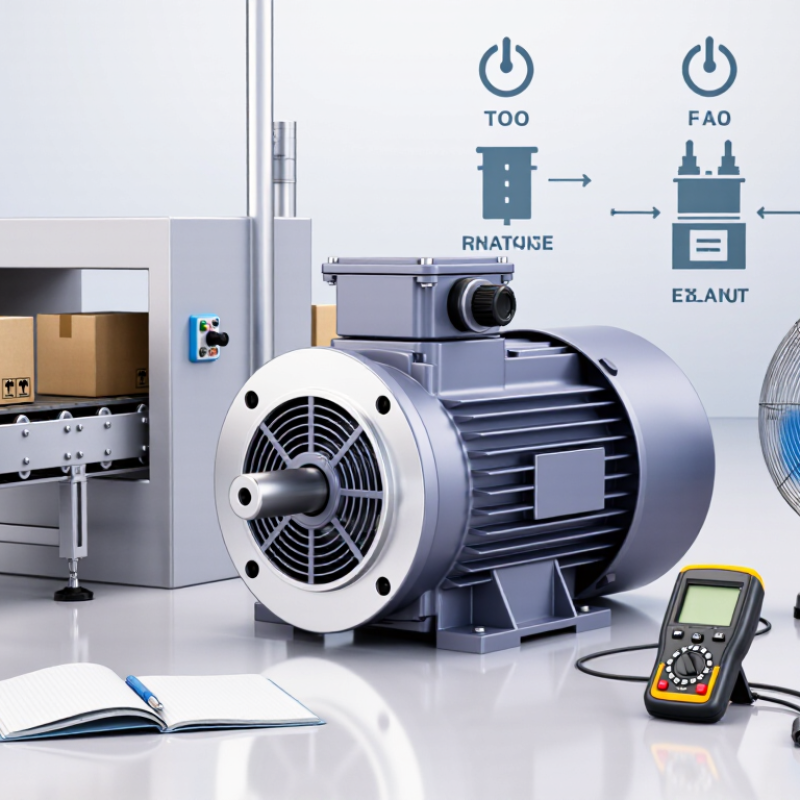
Define the Load Profile: Constant-Torque or Variable-Torque Demands
Choosing a variable speed motor begins with understanding the load profile. Is the machine constant-torque or variable-torque?
Constant-torque loads need similar torque across their speed range. Conveyors, mixers, compressors, and hoists often fit this pattern. A conveyor moving at half speed may still carry the same heavy boxes. The motor must provide steady torque during acceleration and operation.
Variable-torque loads behave differently. Centrifugal fans and pumps usually require less torque at lower speeds. Their power demand can drop significantly as speed decreases. This difference affects motor size, cooling, control settings, and operating cost.
Tips: Record speed, torque, running hours, and starting conditions. Check the heaviest product, not only the average load. Measure current during startup if possible. A brief overload can expose an undersized motor. Do not trust a nameplate rating alone.
I once treated a pump like a constant-torque machine, which led to unnecessary oversizing. That mistake showed why measured data matters.
Review the load curve, including friction, inertia, and sudden pressure changes. A conveyor may need high torque at startup, even when its running load appears modest. Also check low-speed cooling, because a slower motor fan may remove less heat. Leave a practical margin, but avoid adding capacity without evidence. Too much margin can reduce efficiency and increase purchase cost.
Compare Motor Types: Induction, Permanent-Magnet, and DC Designs
How to Choose a Variable Speed Motor for Your Needs?
Compare Motor Types: Induction, Permanent-Magnet, and DC Designs
Variable speed selection starts with the load, not the motor label. Pumps and fans usually reward speed reduction, while conveyors need steady torque during acceleration. The U.S. Department of Energy reports that motor systems consume about 68% of industrial electricity. Small efficiency differences can therefore become expensive over time. Induction motors remain practical for dusty factories and frequent starts. They are rugged, widely supported, and relatively affordable. However, their efficiency can fall at light loads. A correctly matched drive is essential.
Permanent-magnet motors usually deliver higher efficiency and power density, especially at partial load. The International Energy Agency estimates that electric motor systems consume about 53% of global electricity. That figure makes efficiency worth serious attention. Yet permanent-magnet designs need suitable controls and may cost more upfront. Their magnets also complicate recycling and repair. DC motors offer simple speed control and strong starting torque. Brushed versions, however, require maintenance because brushes and commutators wear. Brushless DC designs reduce this weakness but need electronic control. No option is perfect.
Tips: Measure the real load profile before purchasing. Record running speed, starting torque, duty cycle, ambient temperature, and available voltage. Select an inverter-rated motor when using a variable-frequency drive. Check cooling at low speed; the built-in fan may move too little air. Leave service clearance around the enclosure. Engineers sometimes oversize motors for safety, but that can reduce efficiency and increase cost. Recheck the decision with measured data, not assumptions.
How to Choose a Variable-Speed Motor for Your Needs?
Compare typical rated-load efficiency ranges for induction, permanent-magnet, and brushed DC motor designs.
Permanent-magnet motors generally provide the highest efficiency, while induction motors offer robust, cost-effective operation. Brushed DC motors provide simple speed control but require periodic brush maintenance. Actual performance varies with motor size, load, controller, and operating speed.
Set the Speed Range: Verify Base Frequency and Operating Limits
How to Choose a Variable Speed Motor for Your Needs?
Set the Speed Range: Verify Base Frequency and Operating Limits
Start with the motor’s nameplate frequency and rated speed. These values define its normal operating point. A motor designed for 50 Hz may not deliver the same performance at 60 Hz. Check the drive’s frequency range, too. The motor and drive must support the intended limits together.
Below base frequency, the motor usually provides constant torque when properly controlled. Above base frequency, available torque often decreases during field weakening. This matters for conveyors, pumps, fans, and lifting equipment. A high-speed setting may also exceed the shaft, bearing, or coupling limit. Do not rely on the drive display alone. Compare motor datasheets, application loads, and manufacturer operating curves. Small oversights can create heat, vibration, or unexpected trips.
Tips: Test the lowest planned speed under real load. Cooling may become inadequate because the motor fan turns slowly. Check allowable acceleration, deceleration, overload duration, and service factor. Leave a practical margin below the maximum limit. I have found that theoretical speed ranges can look generous, yet real machines behave differently. Recheck the setting after installation, especially when the load changes. A conservative range is often more reliable than chasing maximum speed.
Size Power and Efficiency Using IEC 60034-30-1 IE3 and IE4 Classes
How to Choose a Variable Speed Motor for Your Needs?
Motor selection begins with the actual load, not the catalogue headline. The International Energy Agency estimates that electric motor systems consume about 46% of global electricity and nearly 70% of industrial electricity. A small efficiency improvement can therefore reduce operating costs across thousands of running hours.
IEC 60034-30-1 classifies motors by efficiency at rated conditions. IE3 is Premium Efficiency, while IE4 is Super Premium Efficiency. Do not compare these labels alone. Check rated power, torque, voltage, duty cycle, and speed range. A motor rated at 15 kW may suit a pump but fail on a conveyor requiring high starting torque. Variable-frequency drive losses also sit outside the motor’s IE class. The system must be assessed together.
The U.S. Department of Energy reports that properly sized motor systems can deliver substantial energy savings, especially when speed control replaces throttling. Measure the real operating profile: 30% speed for long periods changes the decision. IE4 may reduce losses, but its purchase price, drive compatibility, and payback deserve calculation. A neat spreadsheet can still mislead. Field measurements are better. Record current, load variation, starts per hour, and ambient temperature before choosing. Check thermal performance at low speed, because reduced airflow can quietly shorten insulation life. Some selections look efficient on paper, yet perform poorly when installation conditions are ignored.
How to Choose a Variable Speed Motor for Your Needs? — Size, Power and Efficiency Using IEC 60034-30-1 IE3 and IE4 Classes
Use the table below as a practical preliminary selection guide. Final motor selection should be verified against the driven load, duty cycle, speed range, supply voltage, ambient conditions, inverter compatibility and the motor manufacturer's certified efficiency data.
| Application | Typical Load Type | Recommended Speed-Control Method | Typical Rated Power | Typical Speed Range | Common Pole Configuration | Preferred Efficiency Class | Key Sizing Consideration | Selection Priority |
|---|---|---|---|---|---|---|---|---|
| Cooling fan | Variable-torque load | Variable frequency drive (VFD) | 0.75–30 kW | 30–100% of base speed | 4 or 6 poles | IE3 or IE4 | Fan power decreases approximately with the cube of speed; avoid oversizing the motor. | Part-load efficiency and acoustic performance |
| Industrial pump | Variable-torque or constant-torque load | VFD with suitable pump control | 1.1–250 kW | 40–100% of base speed | 4 or 6 poles | IE3 or IE4 | Check minimum flow, minimum speed, pressure requirements and motor cooling at low speed. | System efficiency and controllability |
| Conveyor | Constant-torque load | VFD with ramp control | 1.5–90 kW | 10–100% of base speed | 4 or 6 poles | IE3 or IE4 | Allow for starting torque, acceleration time, belt friction and overload capacity. | Breakaway torque and thermal capacity |
| Compressor | Constant-torque or power-dependent load | VFD designed for compressor duty | 5.5–315 kW | 40–100% of base speed | 2 or 4 poles | IE4 where lifecycle savings justify it | Verify minimum speed, pressure ratio, cooling, lubrication and allowable overload. | Duty-cycle efficiency and thermal protection |
| Machine tool spindle | Constant-power or high-speed load | Dedicated drive and feedback system | 3–100 kW | 20–200% of base speed, application-dependent | 2 or 4 poles | IE3 or IE4 | Check maximum speed, bearing limits, torque-speed curve, vibration and encoder requirements. | Dynamic response and speed accuracy |
| Hoist or crane drive | Heavy-duty constant-torque load | VFD with brake and feedback | 5.5–250 kW | 5–100% of base speed | 4 or 6 poles | IE3 or IE4 | Size for acceleration, braking, peak torque, duty class, starts per hour and regeneration. | Peak torque, braking and thermal duty |
| Representative Full-Load Efficiency Benchmarks for Four-Pole Motors — IEC 60034-30-1 Context | ||||||||
| Rated Motor Output | IE3 Representative Efficiency | IE4 Representative Efficiency | Practical Interpretation | |||||
| 0.75 kW | Approximately 80–85% | Approximately 85–89% | Small motors can show a noticeable efficiency benefit from IE4, but purchase cost and drive compatibility should be evaluated. | |||||
| 1.5 kW | Approximately 85–88% | Approximately 88–90% | Suitable for pumps, fans and compact machinery where annual operating hours are significant. | |||||
| 5.5 kW | Approximately 89–92% | Approximately 92–94% | IE4 can reduce losses during long operating periods, especially at high utilization. | |||||
| 11 kW | Approximately 91–93% | Approximately 93–95% | A common industrial size; compare total cost of ownership rather than purchase price alone. | |||||
| 22 kW | Approximately 92–94% | Approximately 94–95% | Higher annual energy consumption makes efficiency improvements more financially meaningful. | |||||
| 55 kW | Approximately 94–95% | Approximately 95–96% | Confirm the exact efficiency value at rated load, because the applicable limit varies by rated output and pole count. | |||||
| 110 kW | Approximately 95–96% | Approximately 96–97% | Reduced losses can provide substantial long-term savings in continuously operated equipment. | |||||
| Variable-Speed Motor Selection Checklist | ||||||||
| 1. Determine load power | Calculate required torque and power across the complete speed range. | Use the highest continuous operating point. | Include acceleration, overload, friction, altitude and process margins without routinely oversizing the motor. | |||||
| 2. Match the torque profile | Classify the load as variable torque, constant torque or constant power. | Fan and pump loads usually differ from conveyor and hoist loads. | The drive's control mode and overload rating must match the load profile. | |||||
| 3. Check the speed range | Compare minimum and maximum required speed with the motor's base speed. | Low-speed operation may reduce self-cooling. | Use an independently cooled motor or derating where continuous low-speed torque is required. | |||||
| 4. Select IE class | IEC 60034-30-1 defines efficiency classes for line-operated AC motors. | IE3 is a high-efficiency class; IE4 has lower standardized losses. | Verify the exact rated efficiency on the motor datasheet; efficiency depends on output, frequency, voltage, pole count and operating point. | |||||
| 5. Verify the complete drive system | Assess motor, VFD, cable, filter, feedback and control strategy together. | Motor efficiency class alone does not define total system efficiency. | Consider harmonics, switching losses, power factor, regeneration and standby consumption. | |||||
| 6. Compare lifecycle cost | Estimate annual energy use from load profile and operating hours. | Energy savings increase with load factor and runtime. | Include purchase price, installation, maintenance, downtime, energy cost and expected service life. | |||||
Match the Drive to NEMA MG 1 Inverter-Duty and IEC 61800 Standards
How to Choose a Variable Speed Motor for Your Needs?
Selecting a variable speed motor starts with the drive, not only the horsepower rating. The motor and drive must work as one electrical system. Check whether the motor meets NEMA MG 1 inverter-duty requirements, especially Part 31 guidance. These requirements address insulation stress from fast PWM voltage pulses. They also consider bearing currents, temperature rise, and operation across a wider speed range. Read the nameplate carefully. Small details matter.
Then compare the drive with applicable IEC 61800 requirements. These standards cover adjustable-speed drive systems, including safety, electromagnetic compatibility, and performance considerations. Confirm the drive’s rated voltage, output current, overload capacity, and control method. A 10-horsepower motor does not always suit every 10-horsepower drive. Acceleration loads can demand much more current. Review the actual load profile, including starting torque, braking cycles, and low-speed operation.
Cable length deserves practical attention. Long motor leads can increase reflected-wave stress, while high carrier frequencies may raise heating and interference. Use the motor manufacturer’s approved cable limits, grounding method, and filter recommendations. In field checks, technicians often focus on power ratings and overlook cooling at reduced speed. That mistake can shorten insulation life. I still verify thermal performance under the slowest expected operating condition. Do not guess. Compare the complete installation with the latest applicable NEMA MG 1 and IEC 61800 documents, because an apparently suitable pairing may fail under real operating conditions.
Related Posts
-
China Top 10 Variable Speed Motor Suppliers?
-

7 Essential Tips for Choosing the Right Variable Speed Electric Motor
-
Unlocking Efficiency: How Variable Speed Motors Transform Modern Machinery
-
Unlocking Efficiency: How Variable Speed Electric Motors Can Reduce Energy Consumption by Up to 50%
-
What is a variable speed motor and how does it work?
-

Top 5 Benefits of Using Variable Speed Motors in Industry?