

- Home
- Request for Quote
- Products
- Variable Frequency Drive Systems and Controls
- AC Variable Frequency Drives
- ABB ACS150 Component Drives :: Overview
- ABB ACS150 Component Drives :: Technical Specifications
- ABB ACS150 Component Drives :: Ratings, Types, Voltages and Construction – Prices
- ABB ACS150 Component Drives :: Dimensions, Weight and Noise
- ABB ACS150 Component Drives :: Interface and Options (prices)
- ABB ACS150 Component Drives :: Technical Data
- ABB ACS150 Component Drives :: Control Connections
- ABB ACS350 General Machinery Drives :: Overview
- ABB ACS350 General Machinery Drives :: Technical Specifications
- ABB ACS350 General Machinery Drives :: Ratings, Types, Voltages and Construction
- ABB ACS350 General Machinery Drives :: Dimensions, Weight and Noise
- ABB ACS350 General Machinery Drives :: Interface and Options (prices)
- ABB ACS350 General Machinery Drives :: Technical Data
- ABB ACS350 General Machinery Drives :: Control Connections
- ABB ACS550 AC Variable Frequency Drive :: Overview
- ABB ACS550 AC Variable Frequency Drive :: Hardware Description
- ABB ACS550 AC Variable Frequency Drive :: Standard Features and Options
- ABB ACS550 AC Variable Frequency Drive :: Specifications
- ABB ACS550 AC Variable Frequency Drive :: 230V Ratings (pricing)
- ABB ACS550 AC Variable Frequency Drive :: 380V Ratings (pricing)
- ABB ACS550 AC Variable Frequency Drive :: 480V Ratings (pricing)
- ABB ACS550 AC Variable Frequency Drive :: Dimensions: ACS550 NEMA 1 R1 through R6 Frame Size
- ABB ACS550 AC Variable Frequency Drive :: Dimensions: ACS550 NEMA 12 R1 through R6 Frame Size
- ABB ACS550 AC Variable Frequency Drive :: Dimensions: ACS550-02 NEMA 1 R7 Frame Size
- ABB ACS550 AC Variable Frequency Drive :: Dimensions: ACS550-02 NEMA 1 R8 Frame Size
- ABB ACS550 AC Variable Frequency Drive :: Dimensions: ACS550-U2 NEMA 1 R7 & R8 Frame Size
- ABB ACS 600 Adjustable Speed AC Drives
- ABB ACS800 AC Variable Frequency Drive :: Overview
- ABB ACS800 AC Variable Frequency Drive :: Standard Features / Available Options and Software
- ABB ACS800 AC Variable Frequency Drive :: Specifications
- ABB ACS800 AC Variable Frequency Drive :: Basic Type Code Information
- ABB ACS800 AC Variable Frequency Drive :: 230V Ratings (pricing)
- ABB ACS800 AC Variable Frequency Drive :: 380V Ratings (pricing)
- ABB ACS800 AC Variable Frequency Drive :: 460V Ratings (pricing)
- ABB ACS800 AC Variable Frequency Drive :: ACS 800-U2 NEMA 1 R7 & R8 Frame Size and ACS 800-02+C111 IP21 (NEMA 1) R7 & R8 Frame Size
- ABB ACS800 AC Variable Frequency Drive :: ACS 800 NEMA 1/12 R2 through R6 Frame Size
- ABB ACS800 AC Variable Frequency Drive :: ACS 800-02 NEMA 1 R7 & R8 Frame Size
- ABB ACS800 AC Variable Frequency Drive :: ACS 800-U4 Module R7 Frame Size
- ABB ACS800 AC Variable Frequency Drive :: ACS 800-U4 Module R8 Frame Size
- ABB ACS880 Industrial Low Voltage AC Drives
- ABB ACS880 AC Drives – Technical Data
- Wall-mounted single drives, ACS880-01
- ABB ACS880 Ratings, types and voltages
- ABB ACS880 AC Drives – Dimensions & Connectivity
- ABB ACS880 AC Drives – Standard Software
- ABB ACS880 AC Drives – Intuitive Human-Machine Interface
- ABB ACS880 AC Drives – Integrated Safety
- ABB ACS880 AC Drives – Flexible Connectivity
- Input/output Modules, Speed Feedback Interfaces & Communication Modules
- ABB Softstarters, Type SSM, Medium Voltage, 2300-13,800V :: Description
- ABB Type SSM Softstarters – Medium Voltage, 2300-13,800V :: General Information
- ABB Type SSM Soft Starters – Medium Voltage, 2300 – 13,800V :: Catalog Numbers
- ABB Soft Starters, Type SSM – Medium Voltage, 2300-13,800V :: Technical Data
- ABB Softstarters, Type SSM, Medium Voltage, 2300-13,800V :: Approx. Dimensions
- Yaskawa AC Drives
- AuCom Soft Starters
- Emerson Industrial Automation (Control Techniques and Saftronics) AC Drives
- Control Techniques – Commander SE AC Drive
- Control Techniques – Commander SK AC Drive
- Commander SK :: Features
- Commander SK :: Terminal Diagram and Description
- Commander SK :: Specifications and Dimensions
- Commander SK – Options :: Overview
- Commander SK – Options :: Configuration and Programming
- Commander SK :: Operator Interface
- Commander SK :: Power Accessories
- Commander SK :: Environmental Protection and Cable Management
- Commander SK :: Input / Output
- Commander SK :: Communication
- Commander SK :: Programming Software
- Control Techniques – Commander SX AC Drive
- Commander SX :: Features, Ratings, Prices and Ordering
- Commander SX :: Terminal Diagram and Description
- Commander SX:: Specifications and Dimensions
- Commander SX :: Options – Overview / Drive Configuration and Programming
- Commander SX :: Communication / Operator Interface
- Commander SX :: Power Accessories
- Commander SX :: Input/Output and Communication
- Control Techniques – Unidrive SP AC Drive
- Unidrive SP :: Features
- Unidrive SP :: Ratings, Prices & Ordering – Wall Mount
- Unidrive SP :: Ratings, Prices & Ordering – Free Standing Cubicle
- Unidrive SP :: Unidrive SP Regen Mode
- Unidrive SP :: Terminal Diagram and Description
- Unidrive SP :: Specifications and Dimensions
- Unidrive SP :: Options – Overview
- Unidrive SP :: Operator Interface
- Unidrive SP :: Power Accessories
- Unidrive SP :: Option & Feedback Modules
- Unidrive SP :: Option Input / Output Modules
- Unidrive SP :: Option Application / Programming Modules
- Unidrive SP :: Option Communication Modules
- Unidrive SP :: Drive Configuration and Programming
- Unidrive SP :: Application Programming Software
- Unidrive SP :: Pre-packaged Solutions
- Saftronics GP10 AC Drives
- Saftronics GP10 – Pricing, Dimensions & Weights
- Saftronics GP10 – Optional DC Link Reactors
- Saftronics GP10 – Options & Accessories
- Saftronics GP10 – Palm Pilot Saflink Kit
- Saftronics GP10 – SR10 Radio Modem Kit
- Saftronics GP10 – Relay Output Card
- Saftronics GP10 – Digital I/O Interface Card
- Saftronics GP10 – Analog I/O Interface Card
- Saftronics GP10 – SF-10 Ethernet Module
- Saftronics GP10 – Interface Option Card
- Saftronics GP10 – Under Torque Detection Option
- Saftronics GP10 – 24 VDC or 24/120 VAC Interface
- Saftronics GP10 – Air Pressure Sensor + V/I Converter Output Card
- Saftronics GP10 – HMI Pump Controller
- Saftronics GP10 – SDBU – Dynamic Brake Module
- Saftronics GP10 – 208-230V Dynamic Brake Packages
- Saftronics GP10 – 460V Dynamic Brake Packages
- Saftronics GP10 – Ratings Efficiency & Watts Loss
- Saftronics GP10 – Standard Specifications
- Saftronics GP10 – Basic Connection Diagram
- Saftronics GP10 – Basic Connection Diagram to PLC
- Saftronics GP10 – Basic Connection Diagram (Europe)
- Saftronics GP10 – Basic Connection to PLC (Europe)
- Saftronics S10 AC Drives
- Saftronics S10 – Options and Accessories
- Saftronics S10 – Standard Specifications
- Saftronics S10 – Dimensions
- Saftronics S10 – Dimensions – Part Number: S102002 – S102003 & S104001 – S104003
- Saftronics S10 – Dimensions – Part Number: S102F25 – S102001
- Saftronics S10 – Dimensions — Part Number: S102F25 – S102001 no Operators
- Saftronics S10 – Dimensions – Part Number: S102002-2003 & S104001-4003
- Saftronics S10 – Basic Wiring Diagram
- Saftronics CV10 AC Drives
- Saftronics CV10 – Part Numbers, Dimensions & Weights
- Saftronics CV10 – LED Keypad with Speed Pot
- Saftronics CV10 – LCD Keypad (supports 5 Languages)
- Saftronics CV10 – Keypad Extension Cable
- Saftronics CV10 – Communication Option Cards
- Saftronics CV10 – Bi-Polar Speed Reference Option Card
- Saftronics CV10 – Standard Specifications
- Saftronics CV10 – Ratings Efficiency and Watts Loss
- Saftronics CV10 – Dimensions Frame 1 – IP20 (Open Chassis)
- Saftronics CV10 – Dimensions Frame 1 – NEMA 1
- Saftronics CV10 – Dimensions Frame 2 – IP20 (Open Chassis)
- Saftronics CV10 – Dimensions Frame 2 – NEMA 1
- Saftronics CV10 – Dimensions Frame 3 – IP20 (Open Chassis)
- Saftronics CV10 – Dimensions Frame 3 – NEMA 1
- Saftronics CV10 – Basic Wiring Diagram
- Saftronics VG10 AC Drive
- Saftronics VG10 – Pricing, Dimensions & Weights
- Saftronics VG10 – Optional DC Link Reactors
- Saftronics VG10 – Options and Accessories
- Saftronics VG10 – Palm Pilot Saflink Kit
- Saftronics VG10 – Relay Output Card
- Saftronics VG10 – SR10 Radio Modem Kit
- Saftronics VG10 – Digital I/O Interface Card
- Saftronics VG10 – Analog I/O Interface Card
- Saftronics VG10 – SF-10 Ethernet Module
- Saftronics VG10 – PGX Encoder Feedback Card
- Saftronics VG10 – Encoder + Analog Output Card
- Saftronics VG10 – PG Feedback Card SOPCG11SPG
- Saftronics VG10 – PG Feedback Card SOPCG11SPG2
- Saftronics VG10 – Synchronized Operation Card
- Saftronics VG10 – 24 VDC or 24/120 VAC Interface Card Kit
- Saftronics VG10 – Air Pressure Sensor + V/I Converter Output Card
- Saftronics VG10 – SDBU – Dynamic Brake Module
- Saftronics VG10 – 208-230V Dynamic Brake Packages
- Saftronics VG10 – 460V Dynamic Brake Packages
- Saftronics VG10 – Ratings Efficiency and Watts Loss
- Saftronics VG10 – Standard Specifications
- Saftronics VG10 – DC Link Reactor 100 HP and Above
- Saftronics VG10 – Basic Connection Diagram (Sink Logic, Mainly America)
- Saftronics VG10 – Basic Connection Diagram to PLC (Sink Logic, Mainly America)
- Saftronics VG10 – Basic Connection Diagram (Source Logic, Mainly Europe)
- Saftronics VG10 – Basic Connection Diagram to PLC (Source Logic, Mainly Europe)
- Saftronics PC10 (Obsolete) AC Drives
- Saftronics PC10 – Options & Accessories
- Saftronics PC10 – SF-10 Ethernet Module Kit
- Saftronics PC10 – 24 VDC or 24/120 VAC Input + Relay Option Card
- Saftronics PC10 – 24 VDC or 24/120 VAC Interface Card Kit (PC10, GP10, or VG10 Inverter)
- Saftronics PC10 – Relay Output Card
- Saftronics PC10 – HMI Pump Controller
- Saftronics PC10 – PC10 120 VAC Option Card
- Saftronics PC10 – Palm Pilot Saflink Kit
- Saftronics PC10 – Dynamic Braking
- Saftronics PC10 – Drive Ratings Efficiency and Watts Loss
- Saftronics PC10 – Standard Specifications
- Saftronics PC10 – Part Number: PC102F12-9, PC102F25-9, PC102F50-9 & PC102001-9
- Saftronics PC10 – Part Number: PC102002-9, PC102003-9, PC104F50-9, PC104001-9, PC104002-9 & PC104003-9
- Saftronics PC10 – Part Number: PC102005-9 & PC104005-9
- Saftronics PC10 – Part Number: PC102007-9, PC102010-9, PC104007-9 & PC104010-9
- Saftronics PC10 – NEMA 1 Kit Dimensions
- Saftronics PC10 – Basic Wiring Diagram
- Fincor 5700 Series (Obsolete) AC Drive
- Fincor 5740 Series (Obsolete) AC Drive
- Fincor 5750 Series (Obsolete) AC Drives
- Motortronics Soft Starters
- SOLCON Soft Starters
- SOLCON RVS-DN Digital Soft Starter with Advanced Motor Protection
- Solcon HRVS-DN Digital Soft Starter with Advanced Motor Protection
- Solcon HRVS-TX Digital Transformer Soft Starter
- SOLCON RVS-AX Analog Soft Starters
- SOLCON Solstart Plus Analog Soft Starters
- SOLCON RVS-BX Basic Soft Starter with Built-In Bypass
- SOLCON RVS-DX Digital Soft Starter with Built-In Bypass
- SOLCON RVS-EX Digital Soft Starter for Explosion Proof motors with Built-In Bypass
- SOLCON SEM-N Rugged Soft Starter for Naval and Military Specifications
- SOLCON SOLSTART Miniature Analogue Soft Starter
- SOLCON SOLSTART 1P Single Phase Analogue Soft Starter
- SOLCON SOLBRAKE DC Injection Brake Soft Starter
- Magnetek – Soft Starters
- WEG Variable Frequency Drives, Controls and Motors
- ABB ACS150 Component Drives :: Overview
- DC Variable Speed Drives
- DC Drive Fundamentals
- ABB DCS 400 Digital DC Converter Drive
- ABB DCS 500 DC Drive
- ABB DCS800 DC Drives Overview
- DCS800 – Power Converter Modules
- DCS800 Panel Drive
- DCS800 Enclosed Converters
- DCS800 Rebuild and Upgrade Kits
- Adaptive Programming and Start-up Assistants
- DriveWindow Light – Startup and Maintenance Tool
- DCS800 Commissioning Macros
- DCS800 Firmware
- DCS800 Technical Specifications
- Current Ratings – Modules – Non-Regenerative
- Current Ratings – Modules – Regenerative
- Current Ratings – Modules – DCS800-EP Panel Drive
- DCS800 Dimensions and Weights
- DCS800 Technical Diagram
- DCS800 Plug-in Options
- DCS800 Feedback Options
- DCS800 Communication Options – Fieldbus Control
- DCS800 External Field Supply
- ABB DCS800-EP replaces Reliance FlexPak® 3000 – 230V Drive Cross Reference
- ABB DCS800-EP – 460V Drive Cross Reference
- ABB DCS800-EP – Options Cross Reference
- ABB DCS800-EP – Product Differences and Remedies – Hardware
- ABB DCS800-EP – Product Differences and Remedies – Control/Interface & Features
- ABB DCS800-EP – Drive Dimensions
- ABB DCS800-EP – Installation Procedure – Wiring and Configuration
- ABB DCS800-EP – Parameter Cross-Reference
- FINCOR Series 2600/2610 DC Drives
- 50 Amp & 90 Amp DC Field Regulators
- Mentor II | Quantum III | FXM5 Change of Status
- SIMOREG 6RA24 Siemens DC Drive Features
- SIMOREG 6RA70 Siemens Variable Speed DC Drive Description and Base Drive Catalog Numbers
- SIMOREG 6RA70 Siemens DC Drive Features
- SIMOREG 6RA70 DC Master Design & Operation – Converters
- SIMOREG 6RA70 Design & Operation – Parameterization Devices
- SIMOREG 6RA70 Design & Operation – Software Structure
- SIMOREG 6RA70 Design & Operation – Closed-Loop Functions in Armature Circuit
- SIMOREG 6RA70 Design & Operation – Closed-Loop in Field Circuit
- SIMOREG 6RA70 Design & Operation – Optimization Run
- SIMOREG 6RA70 Design & Operation – Monitoring & Disgnosis
- SIMOREG 6RA70 Design & Operation – Functions of Inputs & Outputs
- SIMOREG 6RA70 Design & Operation – Safety Shutdown (E-STOP)
- SIMOREG 6RA70 Design & Operation – Serial Interface
- 1000 Hp DC Variable Speed Drive System
- 3000 Hp DC Variable Speed Drive
- Permanent Magnet DC Motors
- SCR Drive Controllers (SCR-Silicon Controlled Rectifier)
- Custom Electric Control Panel Shop
- GE AC & DC Motors (G.E. Motors – General Electric AC & DC Motor)
- GE X$D Ultra® NEMA Premium Efficiency – TEFC AC Motors
- GE Kinamatic® Explosion Proof AC Motors
- GE Energy Saver® – TEFC Severe Duty AC Motors
- GE Kinamatic® General Purpose AC Motors
- GE Motors Energy Saver NEMA Premium Efficiency – ODP AC Motors
- GE ValueLine™ EPAct Efficiency – TEFC AC Motors
- GE ValueLine™ EPAct Efficiency – ODP AC Motors
- GE Permanent Magnet Custom DC Motors
- GE ValueLine™ Vertical Hollow Shaft AC Motors
- GE Permanent Magnet Standard DC Motors
- GE ASD Inverter Duty AC Motors
- G.E. Permanent Magnet Washdown DC Motors
- Avtron – Drives, Measurement and Tachs
- Avtron – Adjustable Speed Drives and Drive Systems
- Avtron – Speed and Length Measurement
- Avtron – Tachs, Tachometers, Encoders, Rotary Pulse Generators
- Avtron – Sales Literature and Instruction Sheets
- Avtron – Classic Tach Models
- Avtron – Price Quotation Request Form
- Avtron – Tachometers Availability
- Avtron – Heavy, Mill-Duty Encoders
- Avtron – Setting Air Gap on M285 Sensors
- Avtron – M4 Universal Encoder
- Avtron – M56, M67, M85 THIN-LINE
- Avtron – M285QUAD Outline Drawing
- Avtron – Severe Duty Encoders
- Avtron – Mill-Duty Encoders
- Avtron – M3 Universal Encoder
- Avtron – M3 Applications
- Avtron – M3 Installation
- Avtron – M3 Specifications
- Avtron – Tach Accessories
- Avtron – Tach Solutions
- Avtron – Rugged Environments
- Avtron – Selection by Motor Frame Size
- Avtron – Adapter Kits Outline Drawings
- Avtron – Motors with Brakes
- Avtron – NEMA C Face Mounting
- Avtron – Market Specific Applications
- Dynapar Encoders and Tachs
- ACURO AI25 Encoders
- Acuro Series AI25 Absolute Encoder with DeviceNet Interface
- Acuro Series AI25 Absolute Encoder with Profibus Interface
- Acuro Series AI25 Absolute Encoder with Interbus Interface
- Acuro Series AI25 Absolute Encoder with BiSS Interface
- Acuto Series AI25 Optical Encoders with SSI Interface
- Acuro Series AI25 Absolute Encoder with Parallel Interface
- Acuro Series AD25 Drive Absolute Encoder
- Series R25 – Mill Duty, HOUSED Resolver
- Series 21/22 Heavy Duty Incremetal Encoders
- Series H20 Encoder
- Series HA25 Dynapar Heavy Duty Encoders
- Series HR25 Incremental Encoders
- Series HC25 Incremental Encoders
- Series H58 Heavy Duty Encoders
- Series H42 Heavy Duty Encoders
- Series HA725 Indusrtial Duty Encoders
- Series HD20 Optical Encoder
- Series HD25 Optical Encoder – Harsh Duty
- Series H56 Rotopulser Heavy Duty Encoders
- RIM Tach 6200 Digital Tachometer
- Series X25 Incremental Encoders
- Series 60 Rotopulser Incremental Encoders
- Series H20 Hub Shaft Encoders
- Series HSD25 Harsh Duty Optical Encoders
- Series HSD44
- Series HS20 Sealed Hollow Shaft Encoders
- Series HS35 Sealed Hollow Shaft Encoders
- The NEW HS35R
- Series HSD35 Shaftless Optical Encoder
- Series HSD37 Hollowshaft Rotary Encoder
- Series HSD38 Harsh Duty Optical Encoder
- Series DWD38 Heavy Duty Rotary Encoders
- SLIM Tach HS56 Incremental Encoder / Tachometer
- RIM Tach HS85 Digital Tachometer
- SLIM Tach SL56 Rotary Encoder
- SLIM Tach RL67 Incremental Rotary Encoder
- SLIM Tach SL85 Digital Tachometer
- SLIM Tach SL1250 Incremental Encoder
- RIM Tach 8500 Digital Tachometer
- RIM Tach 1250 Digital Tachometer
- Series R45 Rotopulser Incremental Encoders
- ACURO AI25 Encoders
- Spare Parts and Replacement Parts
- PLC (Programmable Logic Controllers)
- Services
- Projects
- Operator Stations by Joliet Technologies
- AC VFD, AC Controllers and DC VSD by Joliet Technologies
- Material Handling Modernization Project by Joliet Technologies
- 10 DC (SCR) Drive System :: Neptune Marine Oil & Gas
- Mermaid Offshore Services :: 4 DC (SCR) Drive Cabinets
- “Frontier Driller” Offshore Oil Rig :: DC (SCR) Drive Bays
- 1000Hp Siemens SIMOREG 6RA70 DC Variable Speed Drive Retro-Fit
- Smurfit-Stone: Corrugator Crew Sets Production Record
- Steel Slitting Line for Braner USA
- 1000HP DC Drive, Bow Thruster Application for Pegler Automation
- 1000HP DC Traction Motor Drive, Slurry Pump Application for Baker Hughes
- Siemens 6RA70 DC Drive and GE 752 Traction Motor to Hallett Materials
- ABB ACS 800 VFD to Applied Synergistic
- Two 200Hp Variable Speed DC Drives and Motors to JHT Electronics
- Substrate Technology Inc. :: Joliet Technologies, L.L.C.
- Wyco Tool Company
- Variable Frequency Drives and Controls for Food Processing and Bakery Machinery
- Information
- Guide to Harmonics with AC Variable Frequency Drives
- Variable Speed Drives – Application Information
- Reducing harmonics caused by variable speed drives
- FAQ – Variable Speed Drives Frequently Asked Questions
- EASA Electrical Engineering Handbook
- Part Winding Start
- 3Ph Motors, Single Speed
- 3Ph Motors, 2 Speed, Single Winding
- Connections for NEMA DC Motors
- Connections for NEMA DC Generators
- Field Polarities of DC Machines
- Maximum Locked-Rotor Currents – Three-Phase Squirrel Cage Motors
- NEMA Code Letters for AC Motors
- General Speed-Torque Characteristics
- Effect of Voltage unbalance on Motor Performance
- Starting Characteristics of Squirrel Cage Induction Motors
- Allowable Starts and Starting Intervals
- NEMA Size Starters for Three-Phase Motors
- Starter Enclosures
- NEMA Size Starters for Single-Phase Motors
- Determining the Polarization Index of Machine Windings
- Formulas for Electrical Motors
- Motor Application Formulas
- Glossary of Terms
- Variable Frequency Drive (VFD) Case Studies
- VFD Case Studies – ABB drives & motors help to launch lifeboats quickly and safely.
- VFD Case Studies – Paperboard mill benefits from using DC drives
- VFD Case Studies – ABB Drive cuts water pumping bill for semiconductor plant.
- VFD Case Studies – Insulation manufacturing process saves energy with ABB :: Joliet Technologies
- VFD Case Studies – ABB drives cut costs at MINI production plant
- VFD Case Studies – Film maker slashes costs with ABB drives
- VFD Case Studies – ABB drive cuts costs for wooden toy company
- VFD Case Studies – Close pump control doubles efficiency for West of Scotland Water
- VFD Case Studies – ABB Energy Appraisal Saves Money :: Joliet Technologies
- VFD Case Studies – Staggering energy savings prove value of professional audit
- VFD Case Studies – Soft starters save costs for mechanical engineers
- NEMA Frame Chart and T-Frame Chart :: Joliet Technologies
- Model 1681 Instruction Manual – Firing Circuits DC SCR Drives
- IGBT – Insulated Gate Bipolar Transistors :: Joliet Technologies
- Blog
Blog
China Top 10 Vintage Shoe Cabinet Manufacturers
A well-made Vintage Shoe Cabinet does more than hide footwear. It protects the hallway from clutter while adding the warmth of aged wood, patinated handles, and carefully joined doors. For buyers comparing China’s leading manufacturers, the details matter: stable construction, practical ventilation, consistent finishes, and clear customization options. Small differences show up quickly. A misaligned door can spoil an otherwise handsome piece.
The wider furniture market offers useful context, but not a precise measure of vintage shoe cabinets. Grand View Research estimated the global furniture market at USD 677.09 billion in 2023 and projected a 5.4% compound annual growth rate from 2024 to 2030. This broad figure signals a substantial market; it does not prove demand for this specific niche. There is no widely cited standalone market series for vintage shoe cabinets, so claims about niche growth deserve caution.
A useful design principle comes from British designer and writer William Morris: “Have nothing in your houses that you do not know to be useful, or believe to be beautiful.” Morris was not discussing shoe cabinets, but the idea fits this category well. The strongest products balance everyday storage with a distinctive, lived-in appearance. This guide to China’s top 10 Vintage Shoe Cabinet manufacturers will help readers compare capabilities, materials, and design approaches. It is not a substitute for checking samples, production details, and supplier references. A photograph can flatter. A real cabinet tells more.
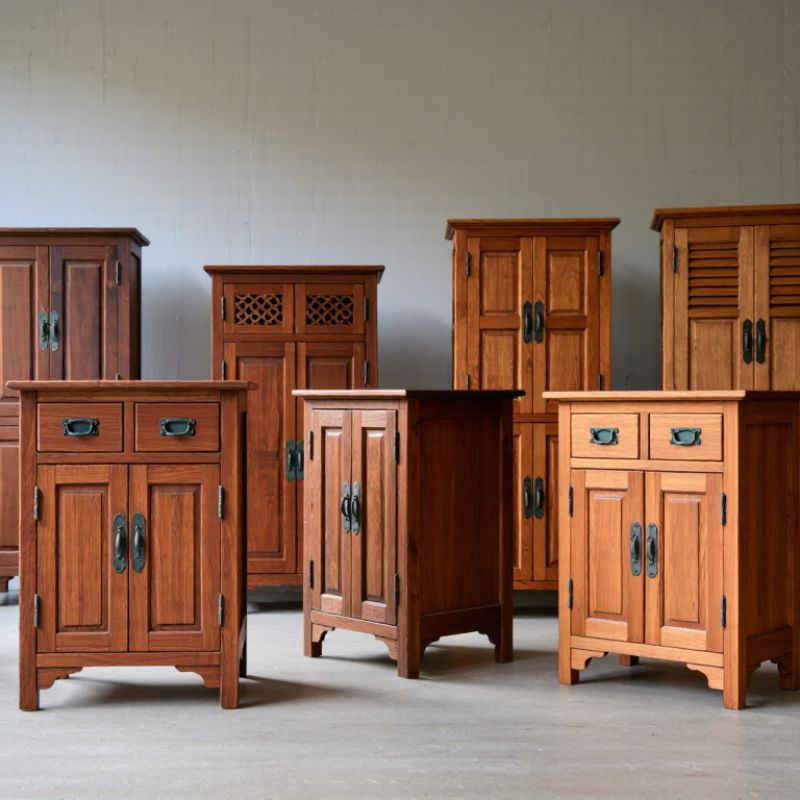
Vintage Shoe Cabinets in China: Market Scope and the 10-Manufacturer Landscape
China’s vintage shoe cabinet market spans solid-wood workshops, panel-furniture factories, and export-oriented manufacturers. Their products may feature distressed paint, visible grain, iron-style handles, and compact drawers for keys or shoe-care items. Practical details matter: ventilation openings, shelf spacing, door clearance, and stable feet affect everyday use. A cabinet that looks convincingly aged still needs smooth hinges and an easy-to-clean interior.
The ten-manufacturer landscape is best assessed by capability, not by an unsupported ranking. Compare suppliers that specialize in custom finishes with those offering repeatable production, then check their materials, minimum order quantities, sample process, packaging, and stated lead times. Request close-up finish samples and inspect cabinet corners, drawer alignment, and back panels; photographs alone can miss uneven distressing or thin construction. Ask how dimensions and finish consistency are checked between samples and bulk orders. Not always obvious. Vintage styling can vary from one production run to another, and that trade-off deserves attention. A careful comparison helps buyers distinguish decorative appeal from dependable construction.
Wooden Cabinet Materials and Production: Key Requirements in GB/T 3324-2017
For China’s vintage shoe-cabinet manufacturers, GB/T 3324-2017 makes material control part of product quality, not a finishing detail. The standard addresses wood moisture content, material selection, processing, and inspection. In practice, factories should check moisture against the applicable regional equilibrium conditions before cutting and assembly. A dry workshop can still produce panels that move after delivery. That sounds tidy on paper. Real timber is less obedient.
Material records should identify board type, veneer, and finish, while production checks catch uneven gaps, rough edges, and loose joints. FAO’s Global Forest Products Facts and Figures 2022 reports global sawnwood production at about 445 million cubic metres, underscoring the scale of the wood supply chain behind furniture. For a cabinet, scale does not guarantee consistency: inspect sample panels and finished units, and document defects by batch. Small checks matter. A door that rubs today may sag further with repeated use. The standard provides a useful baseline, but factories still need careful workmanship and clear buyer specifications.
Formaldehyde Benchmarks: GB/T 39600-2021 Sets E1 at ≤0.124 mg/m³
Vintage shoe cabinets often use particleboard, plywood, or medium-density fibreboard beneath aged finishes. Their appearance says little about emissions. China’s GB/T 39600-2021 classifies wood-based panels and related products by formaldehyde release: E1 is at or below 0.124 mg/m³. Ask manufacturers for test reports that identify the tested product, method, and result—not just a general material certificate. Small details matter.
The benchmark deserves context. The World Health Organization’s 2010 indoor-air guidelines recommend a formaldehyde level of 0.1 mg/m³ over 30 minutes. This is a health-based air guideline, not a directly interchangeable product-class test; sampling conditions and test methods differ. A cabinet’s actual contribution also depends on its surface area, room size, ventilation, and other furnishings. Numbers need context.
For a vintage-style cabinet, inspect the back panel, drawer interiors, and exposed edges, where finishes or construction may differ from visible faces. Request documentation for the finished product when available, and check whether its test conditions match the claimed classification. A small room with closed windows may behave differently from a ventilated test chamber. I would not treat an E1 label as proof of zero emissions; it is a benchmark, and real-world exposure can vary.
Formaldehyde Benchmarks Relevant to Wood-Based Shoe Cabinets
Emission limits under China’s GB/T 39600-2021 classification for wood-based panels and their products.
The chart shows classification limits, not measured results for specific cabinets or manufacturers. Lower limits indicate stricter formaldehyde emission requirements.
China’s 10 Vintage Shoe Cabinet Manufacturers: Profiles, Regions, and Product Styles
China’s vintage shoe cabinet manufacturers vary in scale, materials, and design focus. A useful comparison of ten suppliers should include workshop capability, production region, and finish options—not just catalog photos. Guangdong-based makers often offer flexible customization and mixed materials, while Zhejiang suppliers commonly present broad furniture ranges. These are tendencies, not guarantees. Details matter.
Product styles range from narrow, distressed-wood cabinets with turned legs to clean-lined units featuring rattan panels or dark metal handles. Some factories can adjust shelf spacing for ankle boots, sandals, or children’s shoes. Ask for internal measurements and a sample finish. A cabinet that looks spacious online may feel cramped when its doors open.
Regional profiles also help buyers understand practical trade-offs. Larger production clusters may support varied order volumes, while smaller workshops can be more responsive to unusual dimensions. Confirm the board type, back-panel construction, hinge quality, and packaging method in writing. A few catalog photos can mislead. Even “vintage” finishes differ in color and texture between batches, and that deserves careful review. A sample is useful, but it may not represent every production run.
How to Compare Suppliers: Quality Control, Lead Times, and Export Compliance
When comparing China’s top vintage shoe cabinet manufacturers, treat “vintage” as a finish specification, not a quality grade. Approve a physical sample and record veneer matching, edge finish, door gaps, hinge operation, shelf load, and surface resistance. Request batch inspection records and corrective-action reports, not just a quality certificate. ISO 9001 describes a quality management system; it does not certify a cabinet’s durability. Small details matter.
Lead times should be mapped by milestone: sample approval, material sourcing, production, inspection, and port handover. The World Bank’s 2023 Logistics Performance Index assessed 139 economies across six areas, including customs, tracking, and timeliness. Use those dimensions to question suppliers about shipment visibility and handover delays. UNCTAD’s Review of Maritime Transport 2024 reports that over 80% of world trade by volume moves by sea, so allow schedule buffer for vessel changes. Estimates are rarely perfect.
Before ordering, confirm the destination-specific documentation with the supplier and your customs broker. Check the proposed HS classification, country-of-origin details, commercial invoice, packing list, and any material or packaging declarations required by the destination. Ask who prepares each document and when drafts will be shared. A low quotation can lose its appeal if paperwork arrives late or product details do not match the shipment. Keep the approved sample and final specification on file; that makes disagreements easier to resolve.
China Top 10 Vintage Shoe Cabinet Manufacturers — How to Compare Suppliers: Quality Control, Lead Times, and Export Compliance
This is a practical comparison scorecard, not a verified ranking of specific manufacturers. Use it to assess anonymized supplier quotations and request documentary evidence; requirements and lead times depend on the product, order, and destination market.
| No. | Comparison dimension | What to compare | Evidence to request | Buyer’s evaluation check |
|---|---|---|---|---|
| 1 | Product construction | Cabinet structure, panel or solid-wood components, back-panel attachment, drawer and door construction, and hardware specification. | Dimensioned drawings, bill of materials, hardware schedule, and a pre-production sample or approved reference sample. | Confirm that the quotation and approved sample describe the same materials, fittings, dimensions, and assembly method. |
| 2 | Vintage finish consistency | Color, sheen, distressing pattern, edge treatment, and permitted variation between units. | Signed finish sample, color reference, approved limit sample, and written description of acceptable variation. | Define the intended appearance in writing. “Vintage” or “antique” alone is not a measurable finish specification. |
| 3 | Material identification | Wood species, engineered-wood type, veneer, substrate, adhesives, coatings, and any recycled or reclaimed material claims. | Material declarations, supplier specifications, and traceability documents where required by the buyer or destination. | Check that declared materials match the sample and purchase contract. Verify restricted-species requirements for the destination. |
| 4 | Dimensional and functional checks | Overall dimensions, shelf spacing, door alignment, drawer operation, stability, and hardware function. | Inspection checklist with specified measurement points and pass/fail criteria; inspection records for production lots. | Set tolerances and functional acceptance criteria before production rather than relying on general statements such as “good quality.” |
| 5 | Quality-control process | Incoming-material checks, in-process inspection, final inspection, defect classification, and corrective-action handling. | Written QC procedure, sample inspection report, defect photos, and a documented corrective-action example. | Agree on the inspection stage, sampling method, defect definitions, and remedies for nonconforming goods in the contract. |
| 6 | Finish and chemical compliance | Applicable restrictions or emissions limits for coatings, adhesives, and composite wood products in the destination market. | Test reports or declarations that identify the tested product or material, test method, issuing laboratory, and report date. | Requirements vary by market and product. Confirm the applicable rules with the importer or compliance specialist; do not treat a generic certificate as proof of every requirement. |
| 7 | Sample and production lead time | Separate timelines for sample development, sample approval, material sourcing, production, inspection, and shipment readiness. | Written production schedule showing milestones, dependencies, order quantity, and the event that starts the lead-time clock. | Compare like-for-like quotations. Ask how holidays, sample revisions, late approvals, and material shortages affect the schedule. |
| 8 | Packaging and transit protection | Protection for corners, doors, finish surfaces, hardware, and flat-packed or assembled components; carton dimensions and shipping marks. | Packaging specification, carton-drop or transit-test records when available, packing photos, and a confirmed carton count. | Approve packaging against the shipping method and handling risks. ISPM 15 applies to regulated wood packaging in international trade; check whether the shipment uses such packaging. |
| 9 | Export documents and customs data | Commercial invoice, packing list, transport document, declared product description, origin information, and any destination-specific documents. | Redacted examples of export paperwork and confirmation of who prepares each document and verifies shipment details. | Have the importer or customs broker confirm tariff classification and destination requirements. Do not rely on a supplier’s HS-code suggestion as a binding customs decision. |
| 10 | Supplier verification and accountability | Whether the counterparty can substantiate its production role, communicate changes, and support claims about capacity or certifications. | Business registration details, facility or process evidence, relevant certification scope, named quality contact, and agreed warranty or claims process. | Check that documents are current and apply to the correct legal entity, site, product, and scope. A management-system certificate is not, by itself, proof that a specific cabinet meets product requirements. |